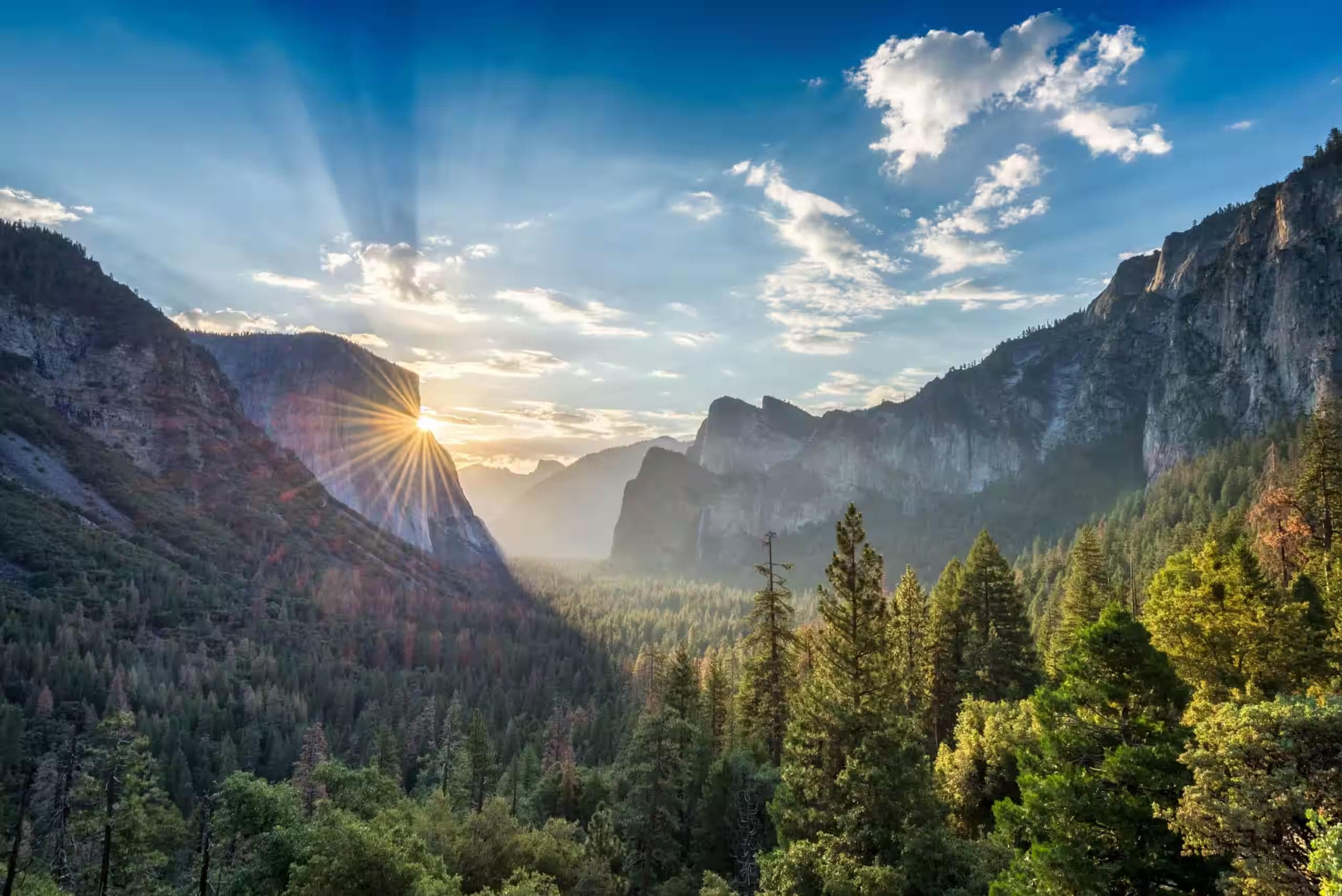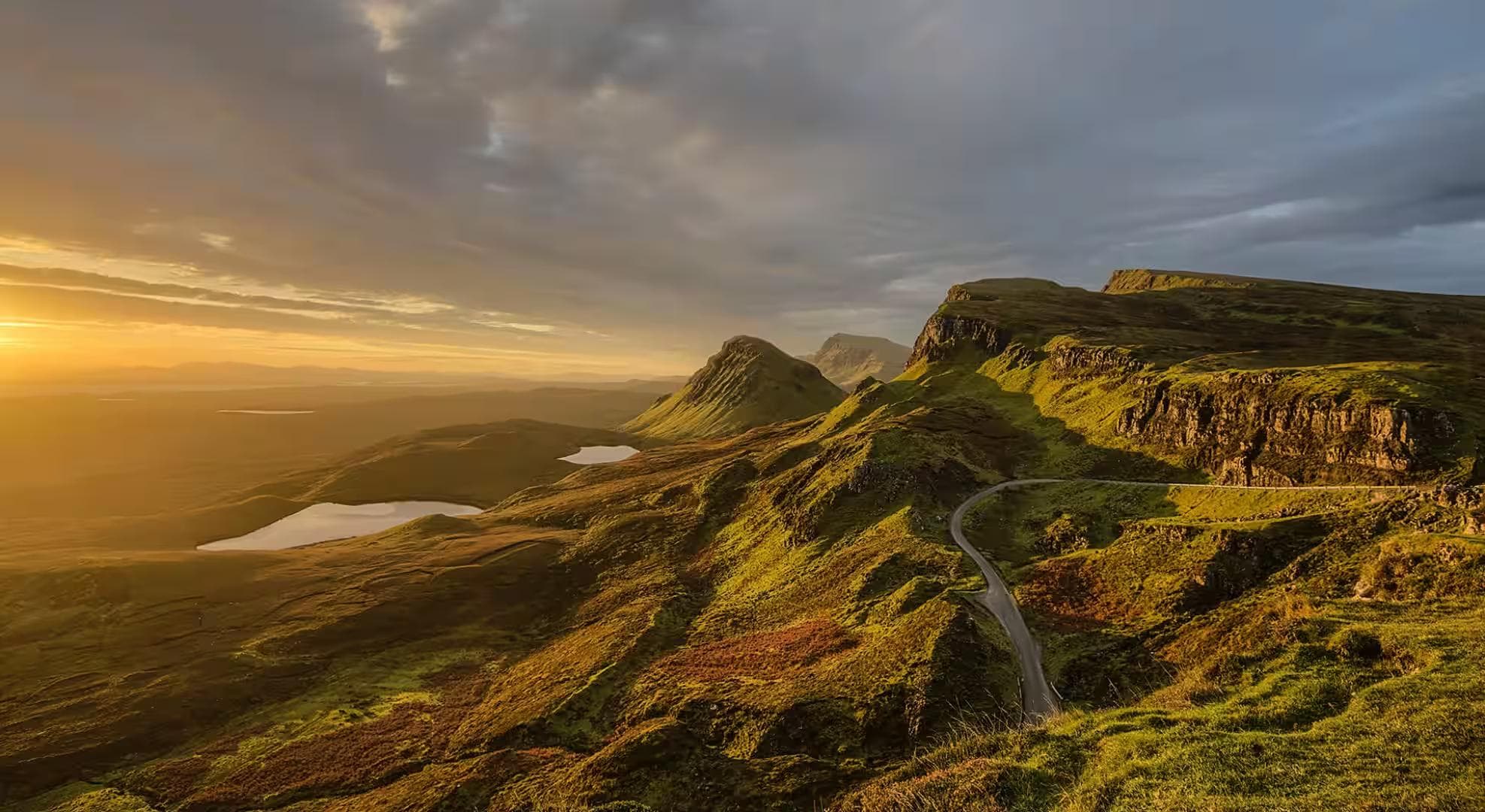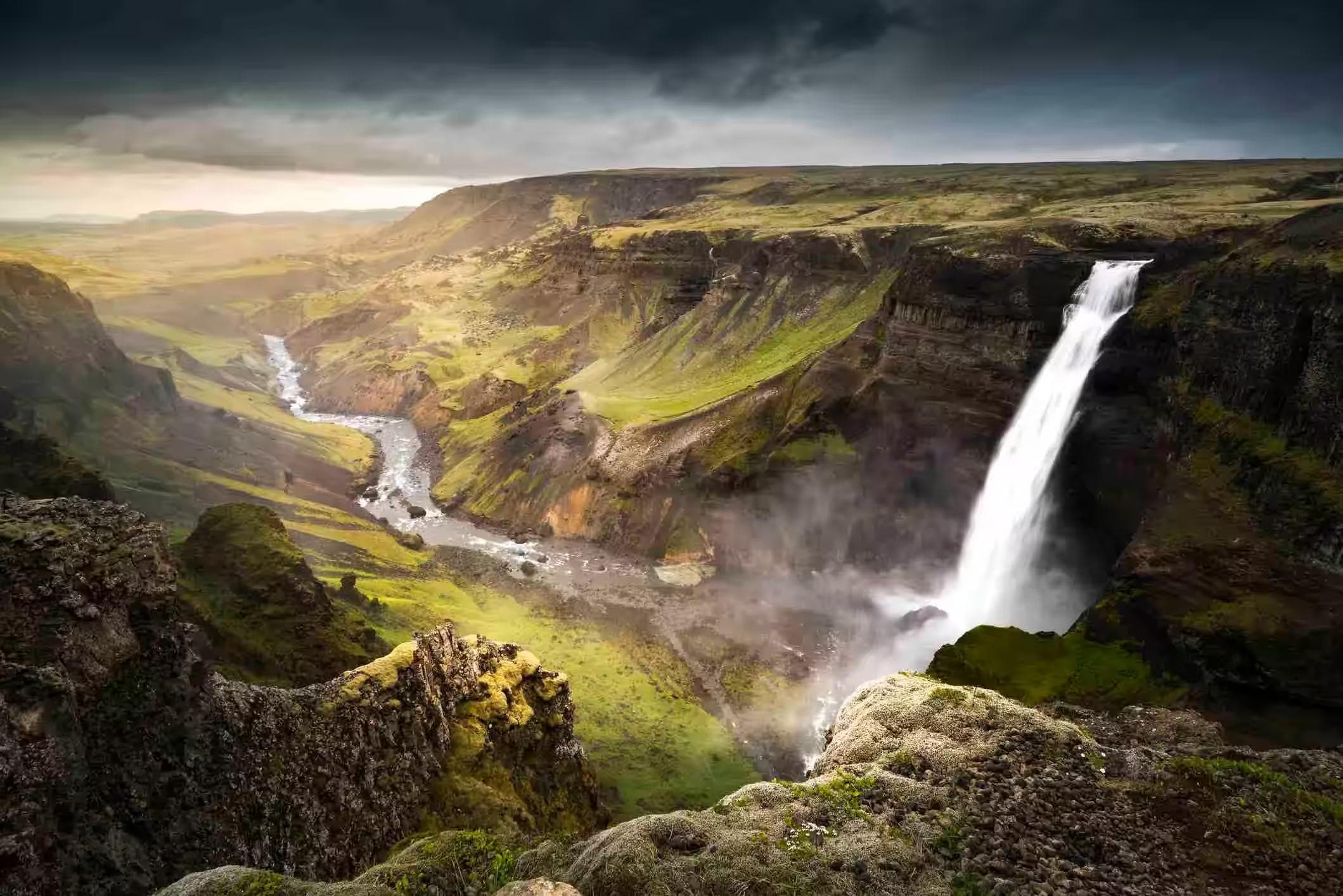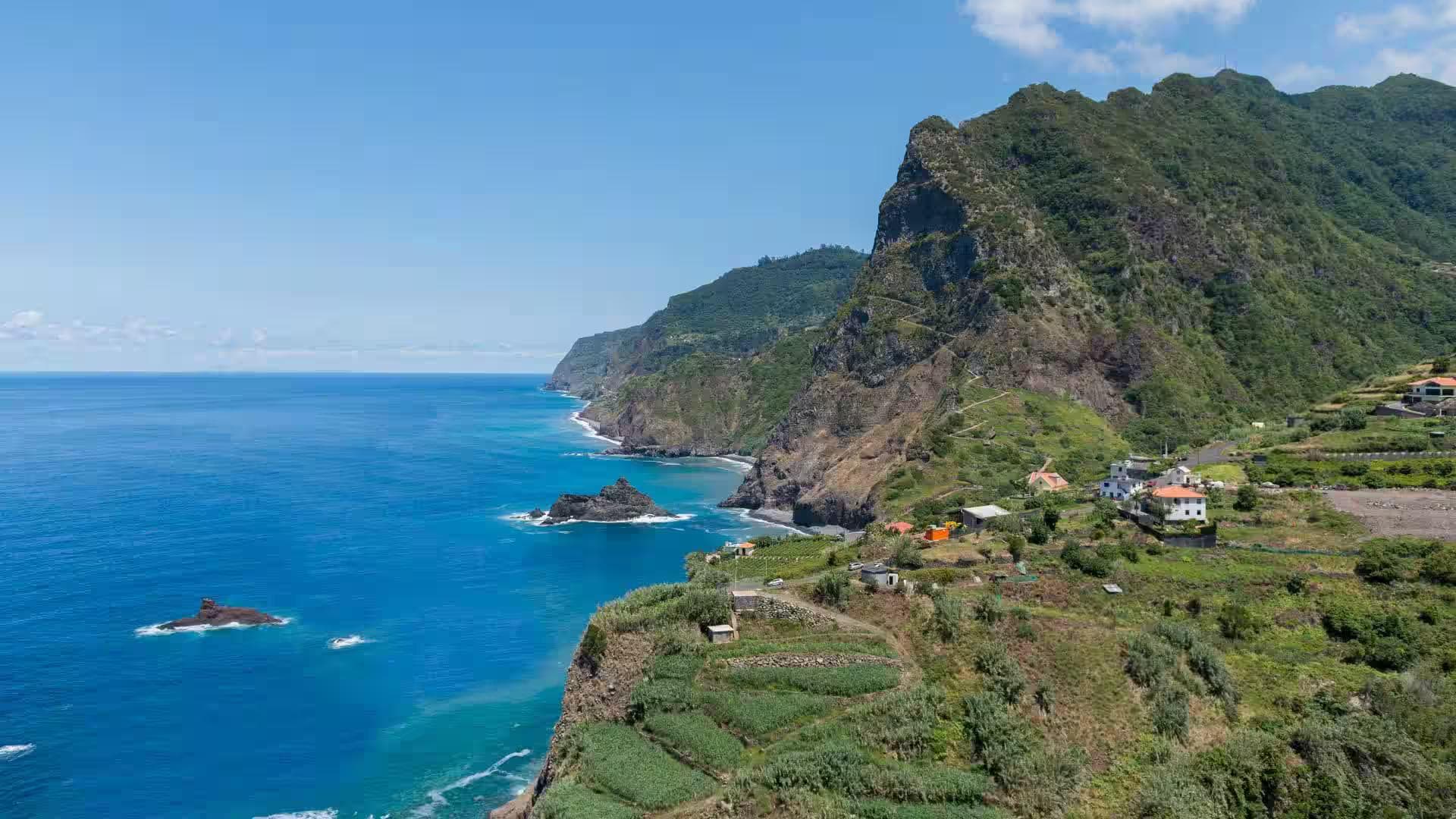
Madeira does not look like a hiking destination from the air. The island appears suddenly from the Atlantic — a dark volcanic mass trailing cloud, its ridgelines invisible above the weather, its coastline dropping directly into deep water without any gradual approach. From the descent into Funchal, the terraced hillsides and the cathedral and the container port all suggest a city, not a trail network. Then you walk your first levada, and the island reveals an entirely different geometry: 2,500 kilometers of narrow stone irrigation channels cutting horizontally through laurel forest, clifftop, and mountain valley, each one with a footpath running alongside it, each one leading somewhere that a road would never reach.
01The Island Logic
The levadas are Madeira's defining infrastructure. Built from the 16th century onward to carry mountain water down to coastal farmland, they were engineered to maintain a constant gradient — which means the paths alongside them are also constant, horizontal, requiring no climbing and no descent for kilometers at a stretch. For a beginner walker, this is an extraordinary gift. Routes that penetrate deep into the island's mountainous interior require no technical ability, no elevation management, and no fitness beyond the willingness to walk for three or four hours in humid subtropical air.
Funchal is the natural base. The island's capital sits on the south coast, connected by road to every levada trailhead, and offers accommodation at every price point within walking distance of the seafront. Flights from mainland Europe arrive at Madeira Airport — approximately a 3-hour journey from most Western European hubs — and a car or taxi to Funchal takes 20 minutes. Renting a car for the four-day stay is strongly recommended. Levada trailheads are spread across the island, and bus connections to the more remote starting points are infrequent and poorly timed for early morning departures.
Getting Oriented
Three practical items before the walking begins:
- Download AllTrails or the Madeira Levada Walks app before arrival — GPS coverage inside the laurel forest tunnels is intermittent, and printed maps are more reliable
- Check trail conditions at VisitMadeira the morning of each walk — landslides close levada paths without much warning, and the official site updates closures daily
- Book accommodation in central Funchal rather than the resort strip east of the city — proximity to the main roads heading north into the mountains saves 20–30 minutes of driving per day
02Day One: Levada do Caldeirão Verde
The first day belongs to the most celebrated levada walk on the island: the Caldeirão Verde route in the Queimadas Forest Park, in the northern interior. The trail follows the levada from the Queimadas Forest Park parking area for 10.5 kilometers through laurel forest — UNESCO-protected laurisilva, the last surviving subtropical laurel forest in the world — to a waterfall at 100 meters dropping into a black basalt pool.
Into the Laurisilva
The first section crosses open moorland before entering the treeline, where the air changes immediately: cooler, greener, smelling of wet bark and moss, the light filtered to a diffuse grey-green that makes everything appear slightly underwater. The forest here is ancient in a way that most European wilderness is not — Madeira's laurisilva has been continuous since before the last Ice Age, and walking inside it produces a quality of stillness that more manicured landscapes do not contain.
The levada path is narrow — in places barely 60 centimeters wide, with the water channel on one side and an unguarded drop on the other — and requires consistent attention underfoot. The surface is stone and compacted earth, damp year-round. The Ridge 15 Daypack keeps hands free throughout, which matters on the narrower cliff-edge sections where balance is the primary concern. Pack it light: the levada trail requires no camping gear, no technical equipment, and no heavy layers — just water, a snack, a rain layer accessible at the top, and the DryPeak Trek Towel for the waterfall stop.
Caldeirão Verde
The waterfall at the end of the trail drops into a circular basalt pool surrounded on three sides by a vertical cliff — the spray fills the entire space, the rock walls run with water, and the sound of it is total. Four short tunnel sections on the final approach, blasted through the basalt cliff face, require a headlamp and a willingness to walk through running water that drips from the ceiling. The tunnels are short — none longer than 200 meters — and the waterfall at the end makes every damp second of them worthwhile.
Carry a headlamp for the four tunnel sections on the Caldeirão Verde approach. The tunnels are dark, wet, and uneven underfoot. A phone torch works in an emergency, but leaves no hands free for balance. The Ridge 15 side pocket fits a compact headlamp without adding meaningful weight.
03Day Two: Pico do Arieiro
The second day trades the levada's horizontality for genuine altitude. Pico do Arieiro — at 1,818 meters, the third-highest peak on the island — is accessible by road to within 50 meters of the summit and offers the most dramatic high-altitude panorama available without serious hiking commitment. Above the cloud line on a clear morning, the volcanic ridgelines of central Madeira emerge from a continuous white floor below, the Atlantic visible in every direction, the island reduced to a series of dark peaks above the weather.
Summit Road
The summit road from Funchal takes approximately 45 minutes by car and climbs through several distinct climate bands — coastal warmth, then forest cool, then the open moorland above the treeline, then a final exposed ridge approach where the vegetation disappears entirely, and the rock takes over. Arrive before 8:00 am to clear the cloud. By 10:00 am, the summit is often inside the weather again, and the views have closed.
Pico Ruivo Trail
From the Pico do Arieiro car park, the Arieiro–Ruivo ridge trail connects to Pico Ruivo (1,862m) — the island's highest point — over 7.5 kilometers of ridge path through tunnels, across exposed saddles, and through cloud forest. The one-way route takes approximately 3.5 hours and requires a return by the same path or a pre-arranged taxi at the Ruivo end. The elevation gain and loss throughout the ridge is approximately 800 meters cumulative — not trivial for a beginner, but entirely manageable at a steady pace.
The SummitShade Sunglasses are essential above the cloud layer. The combination of UV reflection off white cloud below and direct high-altitude sun above produces intense glare that is genuinely disorienting on an exposed ridge with significant drops on both sides. Wear them from the moment the car park elevation clears the morning cloud.
The Arieiro–Ruivo ridge is exposed, and the weather changes quickly at 1,800 meters. Check the IPMA mountain forecast for this day and turn around without hesitation if the clouds close the ridge during the walk. The path is well-marked in good visibility and very poorly marked in low cloud.
04Day Three: Levada das 25 Fontes
The third day returns to levada territory with the 25 Fontes route in the Rabaçal Nature Reserve — a 7.8-kilometer circuit accessing two separate waterfalls and a pool fed by 25 natural springs. The trailhead at Rabaçal is reached via a single-track road from the Paul da Serra plateau that is closed to private vehicles in high season, requiring a shuttle transfer from the roadside car park.
Risco Falls
The first branch of the circuit leads to Risco Waterfall — a single 100-meter drop into a narrow basalt gorge, the water falling free from the cliff edge above with no rock face behind it, just a white vertical line suspended in green. The approach is 15 minutes from the levada junction, and the viewpoint is directly at the base of the fall. In spring, the volume is at its highest, and the spray radius extends 20 meters from the pool. The DryPeak Trek Towel earns its use here — not for swimming, the pool is restricted, but for drying off after five minutes in the spray zone that is essentially unavoidable at this viewpoint distance.
25 Fontes Pool
The second branch continues to the pool itself: a wide, still, blue-green basin in a rock amphitheatre, fed by 25 separate spring sources emerging from the cliff face above. The pool does not move. The springs drip in. The forest closes around it on three sides. It is one of the quieter places on an island that already does quite well. Sit at the pool edge for 20 minutes before the return walk. There is no reason to rush this.
Packing for Four Days
The PackGrid Packing Cubes are worth calling out specifically for a Madeira itinerary. Four days of island trekking in a subtropical humid climate produces a specific laundry challenge: clothes that start the morning dry are reliably damp by noon, regardless of rain, from a combination of trail spray, tunnel drips, and the general humidity of the laurel forest. Separating clean from worn layers in a shared bathroom or a small hotel room without organization is the kind of friction that degrades a trip by day three. The PackGrid system keeps the daily carry sorted from the luggage without unpacking everything onto the bed each morning.
Several Funchal hotels offer a next-day laundry service for approximately €15–20 per bag. Use it on day two. Arriving at day three's levada with fresh base layers in a humid climate is not a small quality-of-life improvement.
05Day Four: Funchal & Cabo Girão
The final day requires no trail. Cabo Girão — a sea cliff at 580 meters, one of the highest in Europe — sits 15 kilometers west of Funchal and is reached in 25 minutes by car. A glass-floored viewing platform extends over the cliff edge, and the view straight down to the water and the terraced banana plantations on the cliff base is one of the more vertiginous experiences available on an island that offers several of them.
Glass Platform
The platform is open without charge and takes approximately 20 minutes to experience properly. The glass floor produces a specific kind of visceral response that does not diminish on a second look — the eye continues to insist that the ground is missing, even when the intellect is certain it is not. The SummitShade Sunglasses are useful here — the Atlantic below reflects direct sun at an angle that makes looking down without eye protection genuinely uncomfortable.
Afternoon in Funchal
Return to Funchal for the afternoon. The Mercado dos Lavradores — the central market — closes around 3:00 pm and is worth visiting before it does: tropical fruit, smoked fish, local flowers, and the particular smell of a covered market that has been operating in the same building since 1940. Buy a poncha — the local sugarcane spirit with lemon — from one of the market bars, sit outside on the steps, and consider that four days on an island this small have covered 1,800 meters of elevation, 50 kilometers of trail, two waterfalls, four tunnels, a volcanic ridge, and a glass cliff edge. Madeira rewards compact travel. It contains considerably more than its size suggests.
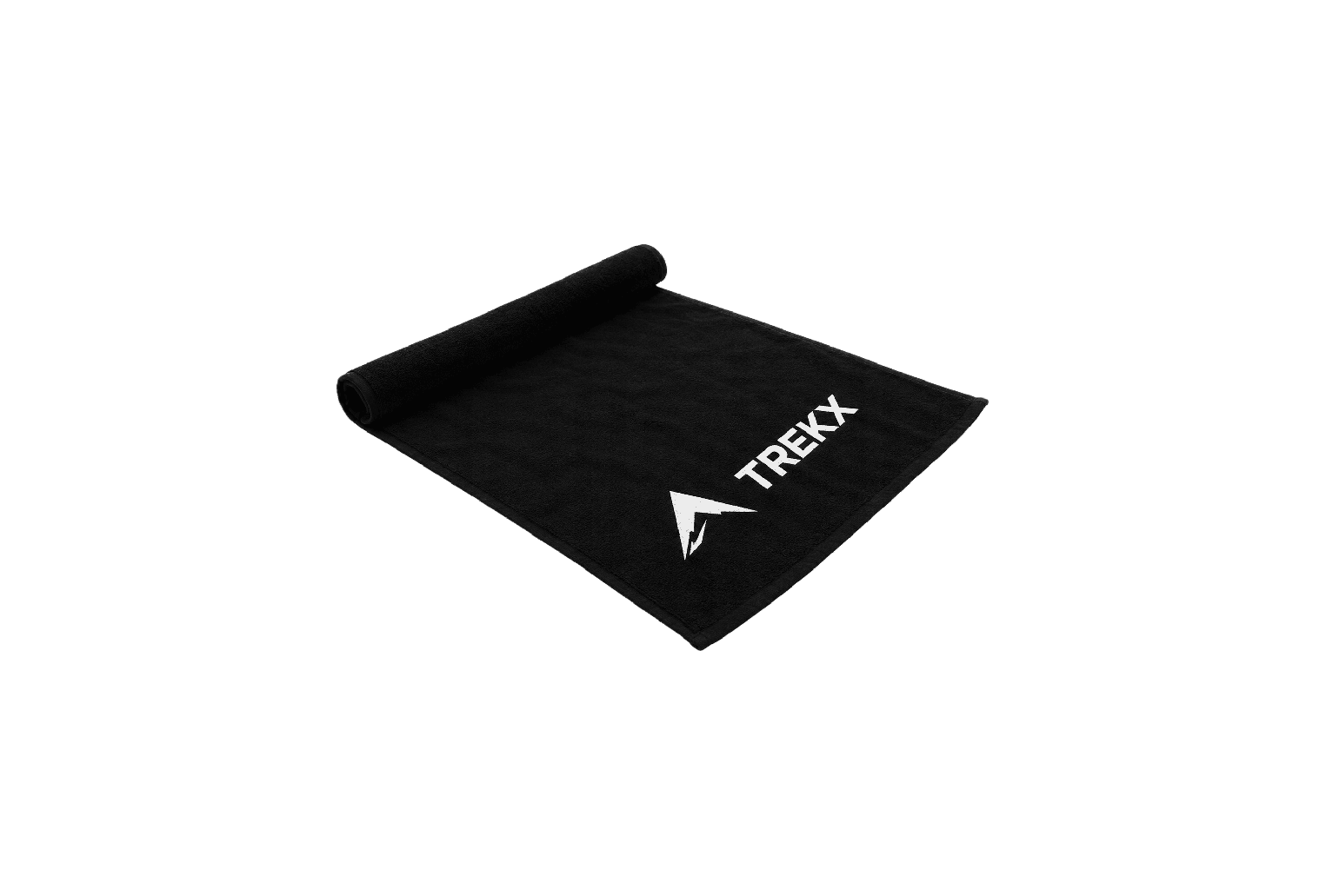
DryPeak Trek Towel
Caldeirão Verde, Risco Falls, and 25 Fontes all produce spray zones where arriving without a quick-dry towel is a damp decision
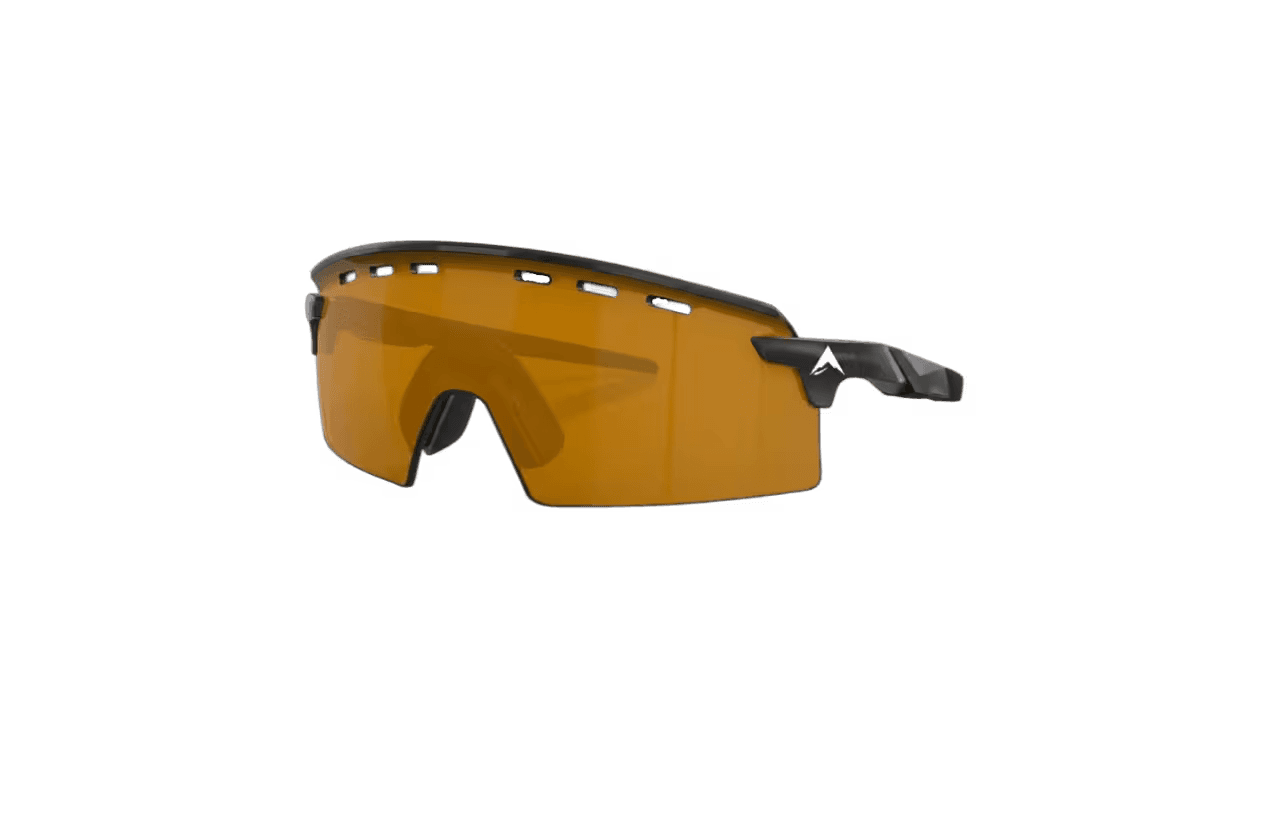
SummitShade Sunglasses
Non-negotiable above the Pico do Arieiro cloud layer and at Cabo Girão
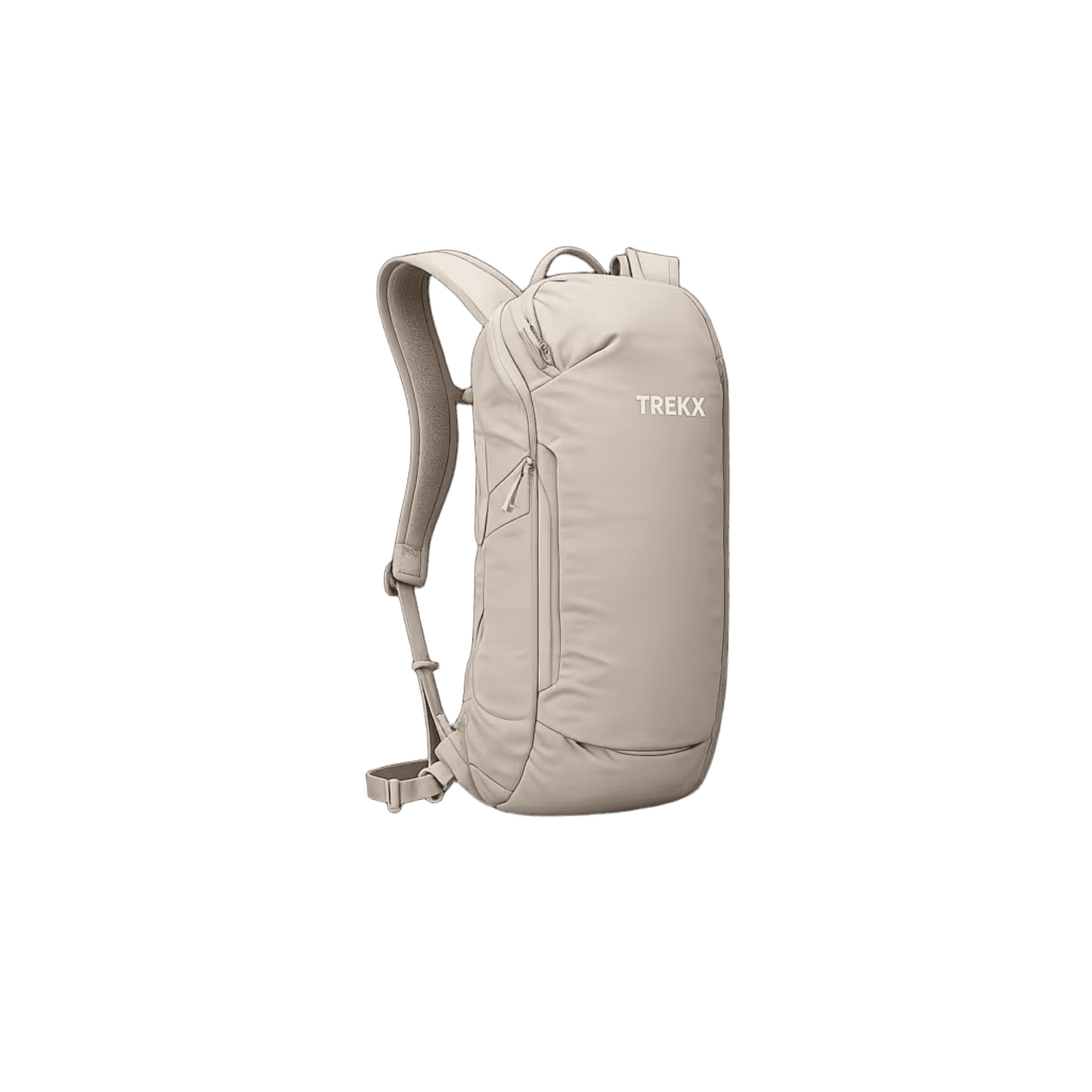
Ridge 15 Daypack
Keeps hands free on narrow levada cliff paths in a volume that never exceeds what the trail requires
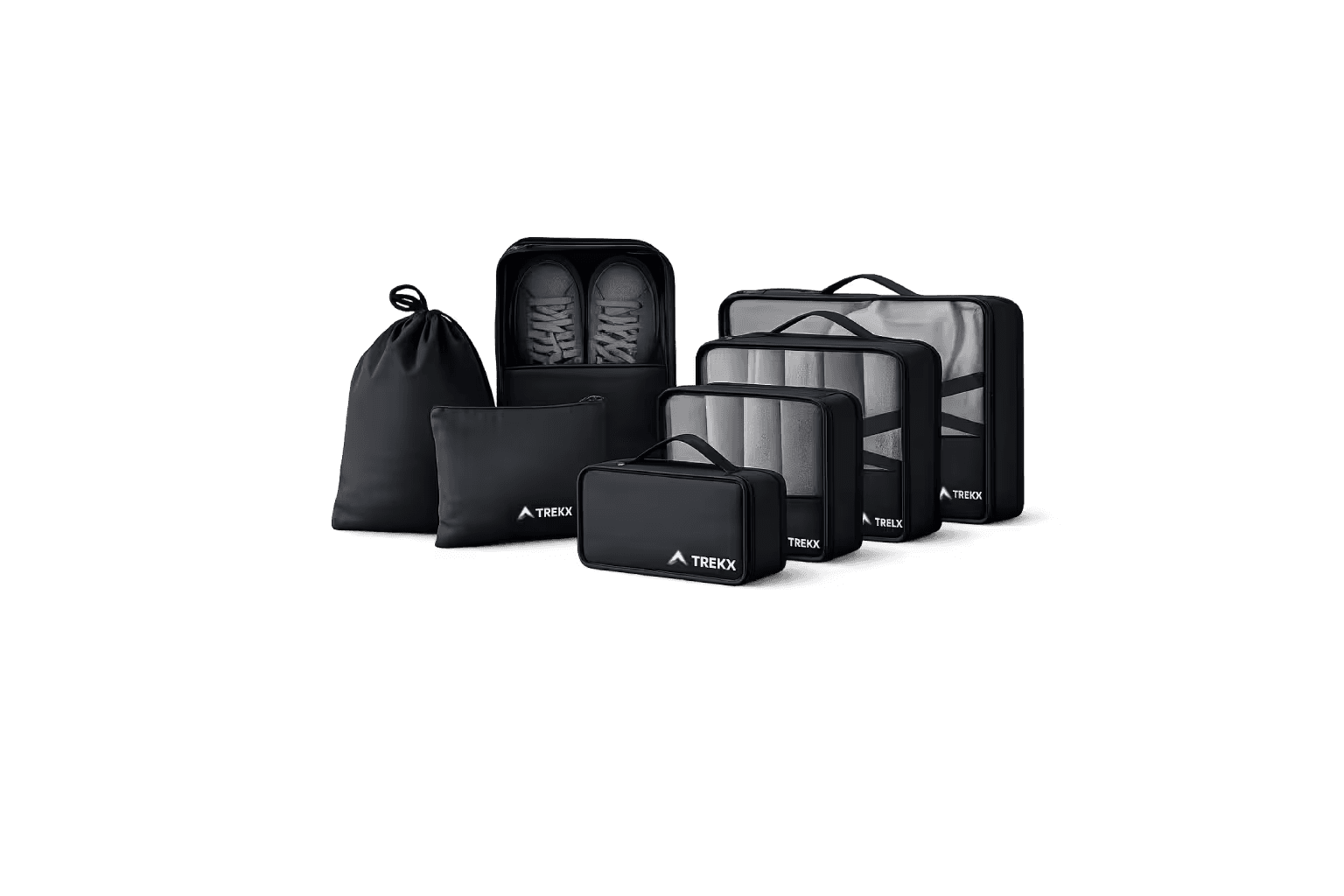
PackGrid Packing Cubes
Separates clean from damp layers across four days of subtropical humidity