Nobody tells you that rain in the Scottish Highlands has texture. Not the flat grey drizzle of a city morning or the sudden violence of a summer storm, but something in between — a soft, continuous, horizontal presence that arrives without drama and does not leave. Standing on the shore of Loch Ness at 7 am with a coffee going cold in your hand and mist sitting so low on the water that it obscures the far bank entirely, you stop waiting for it to clear. This is the weather. This is the point. Scotland does not offer the Alps' dramatic clarity or the Dolomites' colour — it offers something quieter, older, and considerably wetter. Once the resistance to it dissolves, the landscape opens in a way that no amount of sunshine would have revealed.
01The Highlands in Autumn
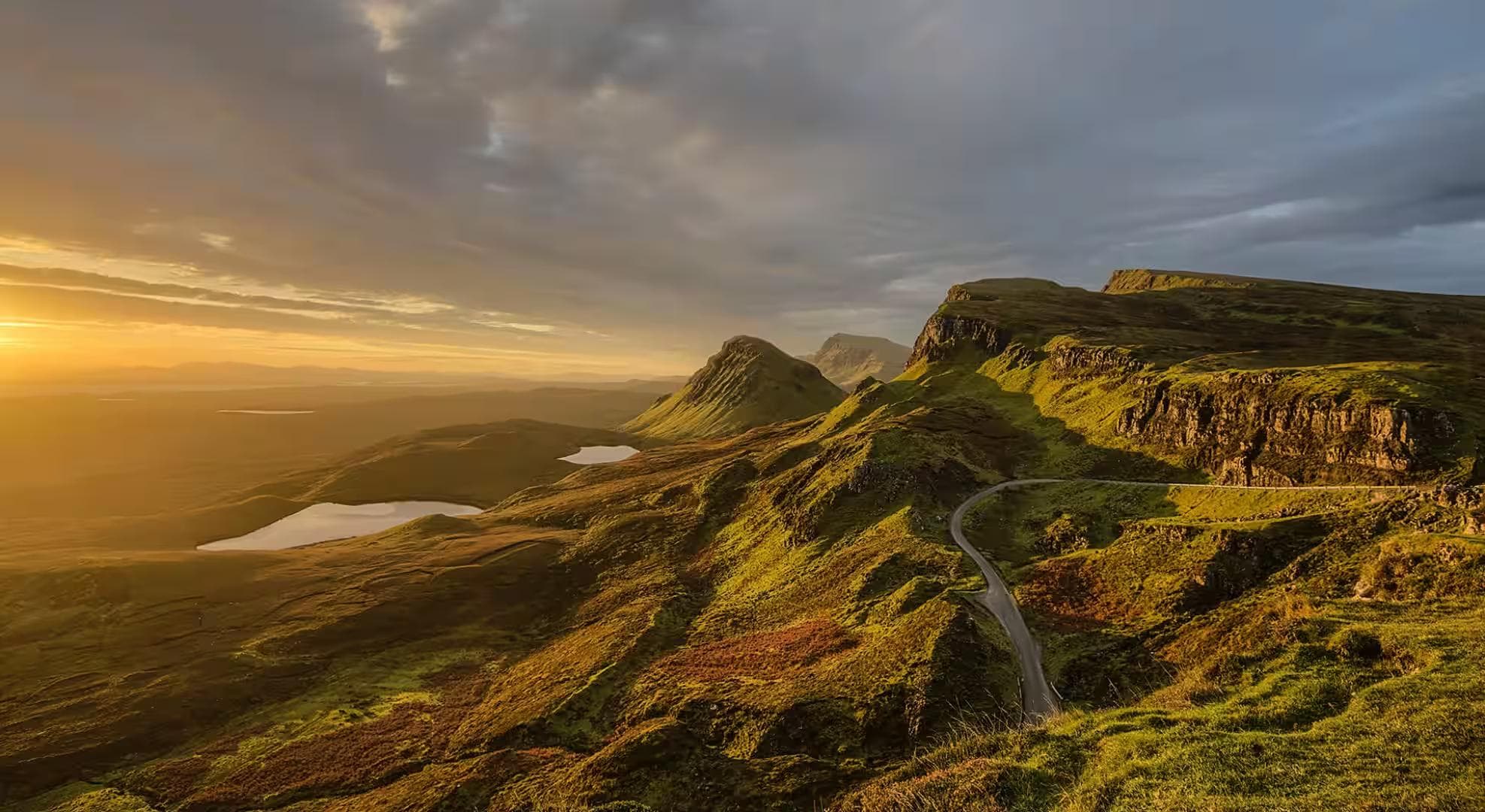
September and October are the months in which the Scottish Highlands reveal their actual character. The summer midges — small biting insects that make exposed skin genuinely unpleasant between June and August — have largely retreated by mid-September. The tourist numbers have dropped with them. What remains is the landscape at its most atmospheric: heather fading from purple to rust across the open moorland, birch and rowan turning gold and amber along the glen floors, the rivers running full and fast from accumulated summer rain. The light, when it arrives — and it does arrive, briefly, unpredictably, magnificently — cuts across the hillsides at an angle that mid-summer never produces.
This is also the most honest season to visit. The Highlands in autumn do not pretend to be comfortable. The wind comes in from the northwest with nothing to interrupt it, the paths are muddy from October through April and frequently still muddy in September, and the temperature on any exposed ridge above 600 meters will be significantly colder than the valley forecast suggests. None of this is a reason to stay home. It is, however, a reason to prepare honestly.
Why Autumn Specifically
Three practical reasons autumn works better than the alternatives for this route:
- No midges — the single most underrated quality-of-life improvement in Highland walking. By mid-September, the midge season is effectively over at higher elevations.
- Crowd-free paths — the main tourist routes around Glen Coe and Ben Nevis carry thousands of walkers in July. In October, the same paths feel personal.
- Dramatic colour — the combination of dying heather, autumn birch, and low grey cloud produces a palette that no other season replicates. It is genuinely beautiful, in a severe way.
02Choosing a Base
For a two-day circuit in the Central Highlands, Fort William is the most practical base. It sits at the southern end of the Caledonian Canal, at the foot of Ben Nevis, and offers accommodation at every price point, a reasonable selection of restaurants, and direct rail access from Glasgow via the West Highland Line — one of the genuinely great scenic train journeys in Europe, worth taking deliberately rather than just functionally.
Getting There
Options from the European continent and within the UK:
- By train from London — Caledonian Sleeper from London Euston to Fort William, overnight, approximately 12 hours. Book through Caledonian Sleeper. One of the more civilized ways to arrive anywhere.
- By train from Glasgow — West Highland Line, approximately 3 hours and 45 minutes. ScotRail timetables here.
- By car from Glasgow — A82 north via Loch Lomond, approximately 2 hours 30 minutes in light traffic. Autumn weekend traffic on the A82 through Loch Lomond & The Trossachs National Park can significantly extend journey times.
- By air — Inverness Airport is the closest commercial airport, roughly 75 minutes from Fort William by car.
Where to Sleep
Three well-positioned options in and around Fort William:
- The Lime Tree Hotel — a converted Victorian manse with an excellent restaurant. Consistently the best dinner in Fort William.
- Bank Street Lodge — central, clean, well-managed. Ideal for a two-night stay without unnecessary ceremony.
- Glen Nevis Youth Hostel — 3 kilometers from town in the glen itself, surrounded by the walk. The most atmospheric option if the budget is being managed carefully.
Book accommodation before travelling. Fort William has a limited total room count and autumn weekends — particularly during the Lochaber Mountain Rescue charity events in October — sell out weeks ahead. Arriving without a booking in the rain is a specific kind of misery.
03Day One: Glen Nevis
The first day belongs to Glen Nevis — the valley that runs southeast from Fort William beneath the flanks of Ben Nevis, one of the most quietly spectacular glacial glens in Scotland. The route described here is not the Ben Nevis summit ascent, which is a separate undertaking requiring a full day, appropriate fitness, and conditions that autumn does not reliably provide. This is the Nevis Gorge and Steal Falls walk, a 10-kilometer return route along the valley floor to a 120-meter waterfall, entirely accessible for walkers of any experience level and genuinely dramatic in wet weather.
Nevis Gorge
The walk begins at the Glen Nevis Visitor Centre car park, approximately 3 kilometers from Fort William town center. The path follows the river east through open moorland before entering the gorge — a narrow slot of polished grey rock through which the Water of Nevis runs fast and white after any significant rainfall. In October, after three weeks of Highland autumn, the river is typically running hard. The gorge path is rocky and uneven in sections, and the spray from the water below keeps the stone permanently damp.
This is where the TerraPath Hiking Shoes earn their first honest test. The gorge path requires nothing technical, but the combination of wet rock, exposed roots, and steep riverside drops on a surface that has not been dry since August demands a shoe with genuine grip and structural support. A flat-soled trainer becomes a liability here within the first 200 meters. The TerraPath also matters at the gorge exit, where a short scramble over large boulders is unavoidable and entirely manageable with the right footwear.
Steal Falls
Beyond the gorge, the valley opens into a wide hanging plain — flat, boggy, impossibly green, ringed by ridgelines that disappear into low cloud — called An Steall Meadows. The waterfall appears at the far end, a white vertical line against dark rock that takes ten minutes of walking across the plain to resolve into its full 120-meter height. Crossing to the base of the falls requires a wire bridge crossing — three cables of tensioned wire, one underfoot and one on each side at hand height — that tests balance in a way that is more fun than alarming. In strong wind, it moves. Cross deliberately, one careful step at a time, and do not look down unless you want to.
The TrailGuard Gaiters come into consistent use across An Steall Meadows. The plain is permanently boggy regardless of season, and the autumn version is actively saturated. Without gaiters, water and mud enter the boot at the ankle on every third or fourth step. The TrailGuard's mid-height cut is appropriate for valley-floor terrain like this — enough coverage to keep the interior of the boot dry through meadow walking, without the bulk of a full mountaineering gaiter on terrain that does not require it.
The wire bridge at Steal Falls can feel intimidating in high wind. It is structurally sound and used by hundreds of walkers annually. Cross one at a time, hold both hand cables, and move slowly. The crossing takes approximately 30 seconds.
Evening in Fort William
Return to Fort William by 4:30 pm at the latest — autumn daylight in the Highlands is short, and the gorge path in darkness without prior knowledge is genuinely unpleasant. Dinner at the Lime Tree Hotel is the correct decision: a short menu built around local venison, Scottish salmon, and Highlands produce, served in a room that smells faintly of woodsmoke. Order the venison. Eat slowly.
04Day two: The Mamores Ridge
The second day asks for more. The Mamores — a long ridge of interconnected peaks running east from Fort William across the south side of Glen Nevis — offer the most rewarding above-treeline walking in the immediate area without requiring the full-day commitment of Ben Nevis. The recommended approach for this guide is the ascent of Mullach nan Coirean (939 meters) from Achriabhach in Glen Nevis: a direct, clearly-pathed ascent that reaches an open ridge in approximately 90 minutes and rewards the effort with, on a clear day, views across to Ben Nevis, south toward Glencoe, and west to the islands.
On an unclear day — which October in the Mamores frequently provides — the reward is different but not lesser. Mist on an open ridge reduces the world to a radius of 30 meters in every direction: just heather underfoot, the path ahead, and the sound of wind moving over grass that no longer makes any sound at all.
The Ascent
From the small car park at Achriabhach (follow the B8004 through Glen Nevis from Fort William, approximately 6 kilometers), the path rises immediately and steeply through open birchwood before emerging onto the lower slopes of the ridge at around 400 meters. The gradient eases across the upper moorland before steepening again on the final 200-meter push to the summit plateau. The full ascent covers approximately 5 kilometers and 900 meters of elevation gain. Allow 3 hours up and 2 hours down.
The full gear system works together on this ascent:
- TerraPath Hiking Shoes — grip on wet grass and heather above the treeline; consistent support on the rocky final approach to the summit
- TrailGuard Gaiters — essential through the boggy lower moorland and on the upper ridge after rain, where wind-driven water enters boot gaps at every exposed step
- Altitude Merino Socks — the piece of gear that makes a wet shoe tolerable rather than destructive. Merino wool retains insulation when wet in a way that synthetic alternatives do not, and five hours of walking in saturated footwear is the precise condition under which the difference between wool and polyester becomes physically undeniable
Summit Conditions
Above 800 meters on the Mamores ridge in October, the wind is a primary environmental factor rather than a background inconvenience. Gusts regularly exceed 50–60 km/h on exposed sections, and the temperature differential between the valley floor and the ridge can be as large as 8–10°C on a cold autumn day. The Stormveil Shell Jacket is the layer that makes the difference between moving comfortably in this environment and actively suffering through it. At 900 meters in horizontal Scottish rain with 55 km/h wind, the warmth-to-weight ratio of a shell jacket stops being an abstract specification and becomes something you feel in real time.
Summit visibility on the Mamores in autumn cloud can drop to under 20 meters. Navigation by landmarks becomes impossible. Download the route to OS Maps or OutdoorActive before departure and carry the device with a full charge. The summit plateau of Mullach nan Coirean is broad and disorienting in low cloud; without a GPS track, the correct descent line is not obvious.
The Descent
The descent follows the ascent route in reverse — the same path, the same birchwood, the same car park — and takes approximately 2 hours at a comfortable pace. By the time the treeline reappears, the sound of the wind drops suddenly, and the warmth of shelter from the birch canopy is immediate and disproportionate. Stop here. Take the jacket off. Drink the remaining water. The worst of the mud is ahead on the lower section, but the hard work is behind.
Do not attempt the Mamores ridge if the overnight forecast shows sustained winds above 70 km/h at the summit level. The MWIS mountain weather forecast covers the Western Highlands specifically and is considerably more accurate than any general weather application for above-treeline conditions. Check it the evening before and again at 6:00 am on the morning of the ascent.
05Reading The Rain
There is a moment somewhere in the second day — usually somewhere on the upper moorland, above the treeline, with the mist sitting at shoulder height and the path ahead visible for maybe 40 meters — when the resistance to the weather completes its dissolution. The rain is not an obstacle. It is the environment. It is the entire point of being here. The Highlands in this condition are not a compromised version of the Highlands in sunshine. They are the version that most closely resembles what this landscape actually is: old, indifferent, and genuinely wild in a way that comfortable conditions never fully reveal.
Scotland does not ask you to enjoy the weather. It asks you to stop fighting it. The two days described here are not the most technically demanding routes in this guide series. They are, however, among the most honest. What the Highlands give in autumn — the empty paths, the texture of the rain, the particular quality of light when it arrives, the silence of an open ridge in mist — cannot be replicated at a more convenient time of year. Come in October. Dress properly. Let the weather be the experience rather than the obstacle, and go home with wet boots and a completely recalibrated sense of what a worthwhile day outdoors actually requires.
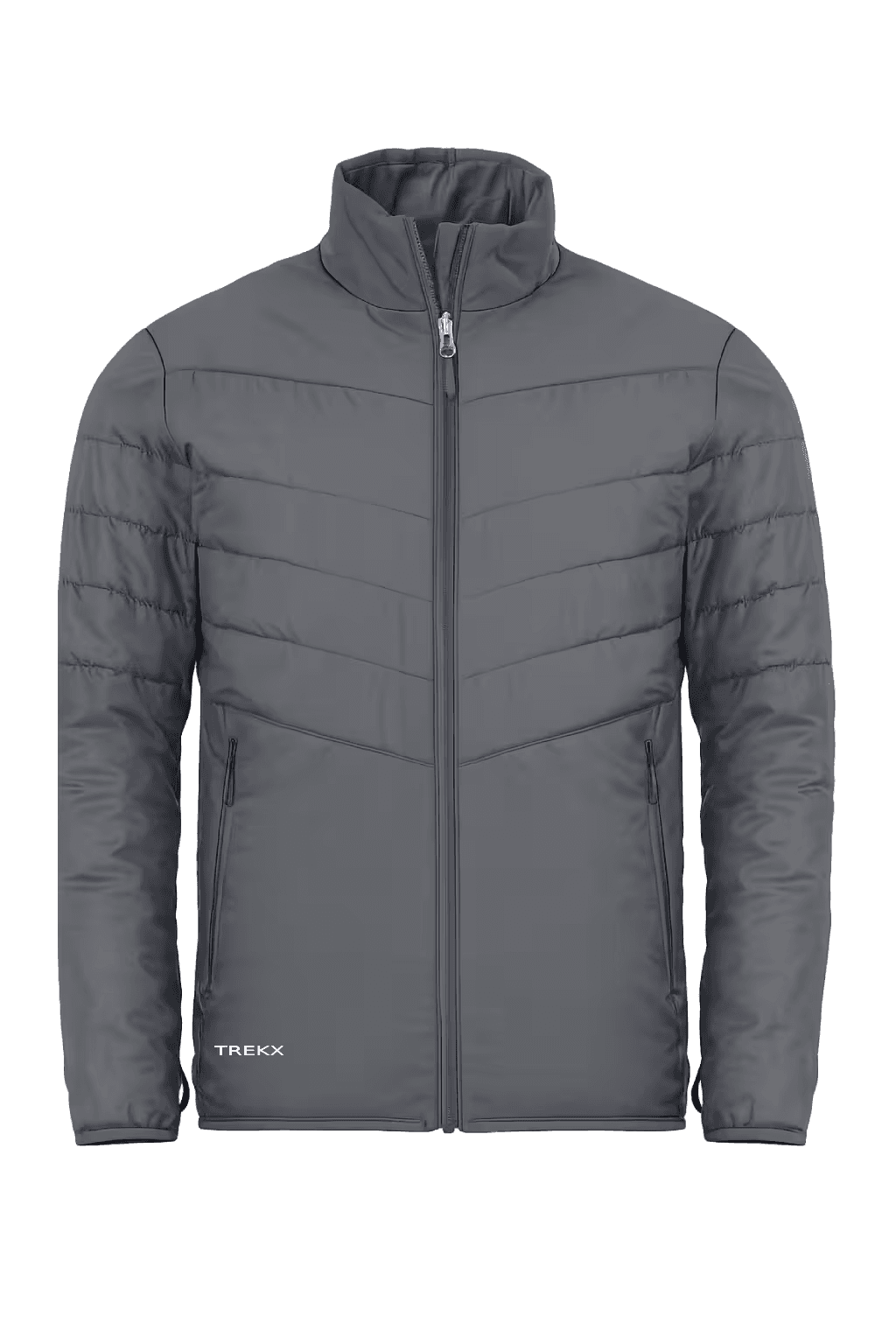
Stormveil Shell Jacket
The essential layer for sustained exposure on the Mamores ridge
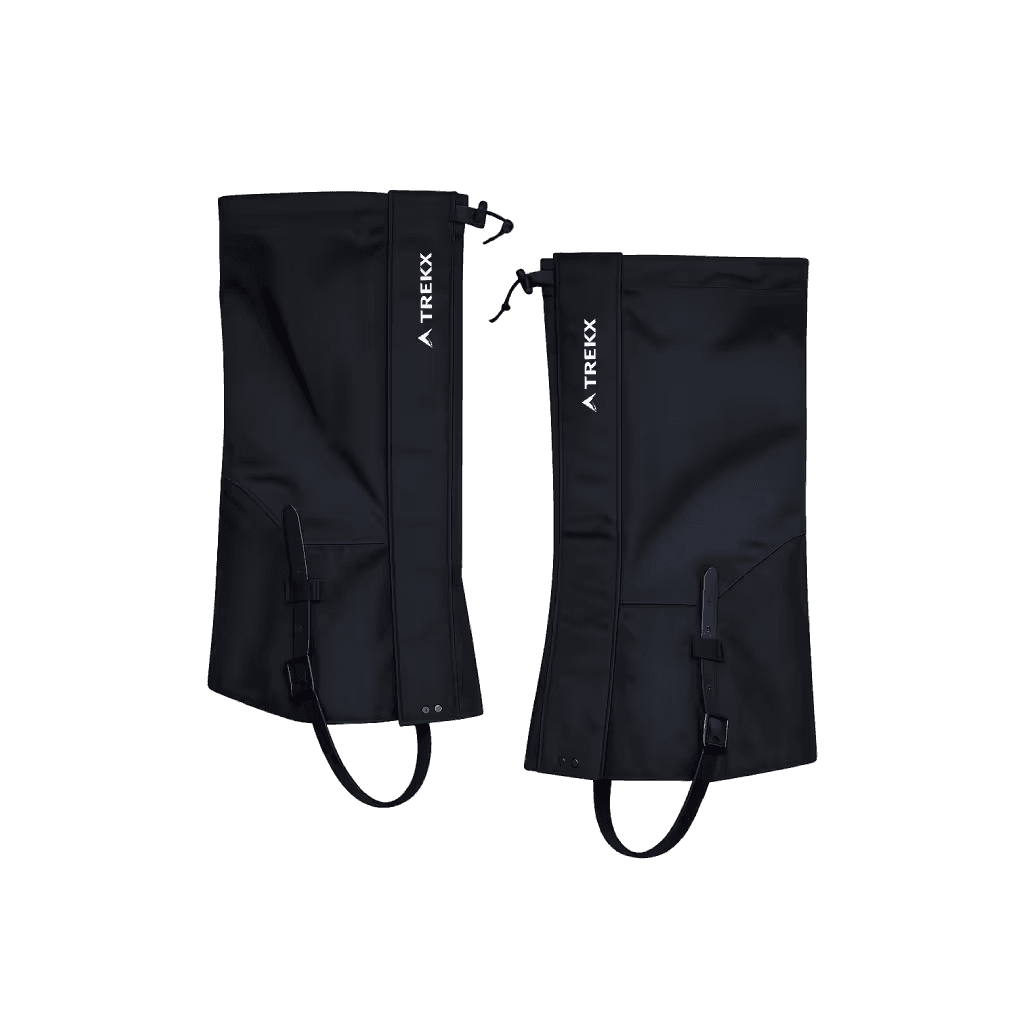
TrailGuard Gaiters
Keeps boots dry through the permanently saturated terrain of An Steall Meadows
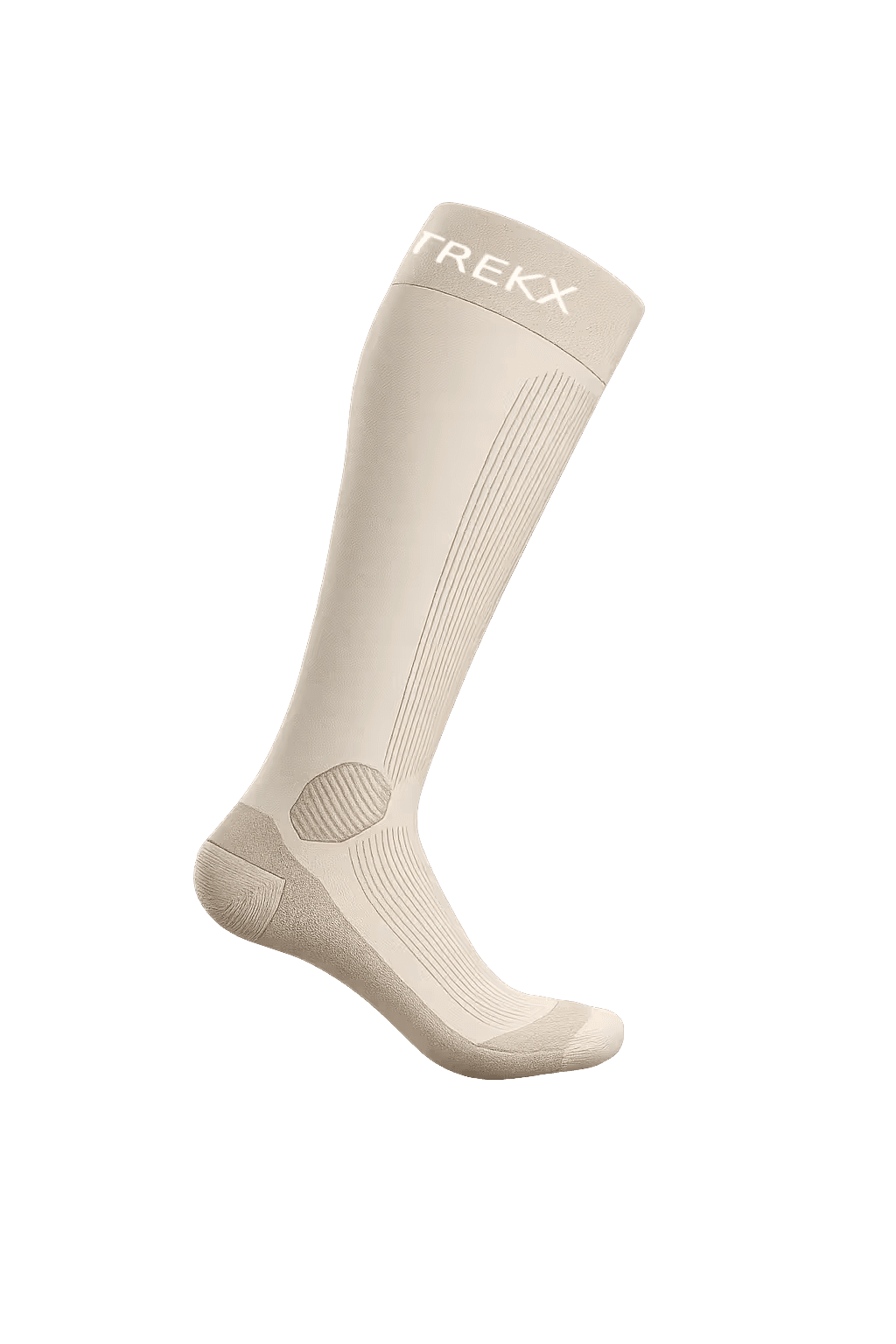
Altitude Merino Socks
Retains insulation in wet conditions across five hours of walking in saturated footwear

TerraPath Hiking Shoes
Provides grip and support through the wet rock of Nevis Gorge and the rocky summit approach of Mullach nan Coirean