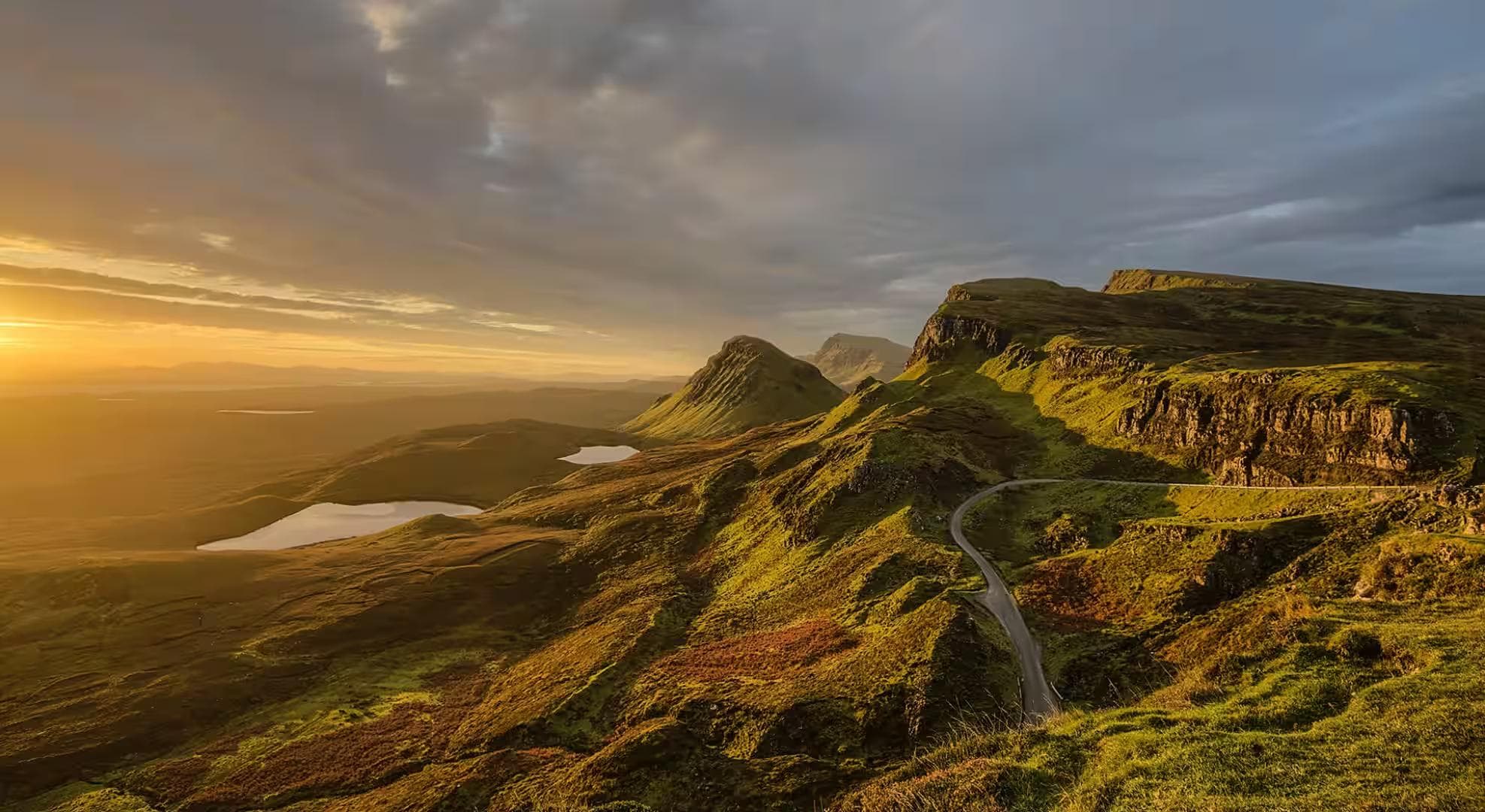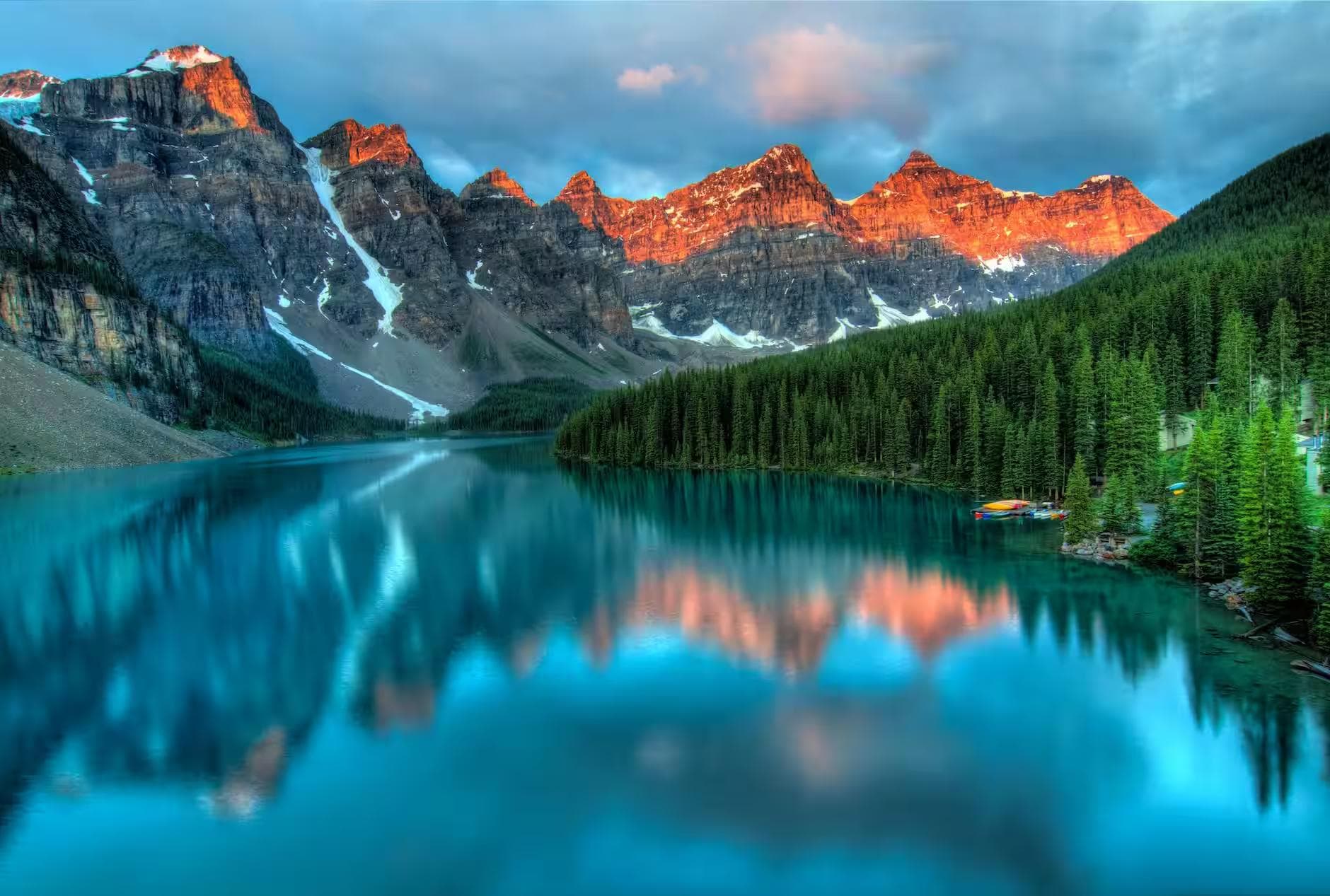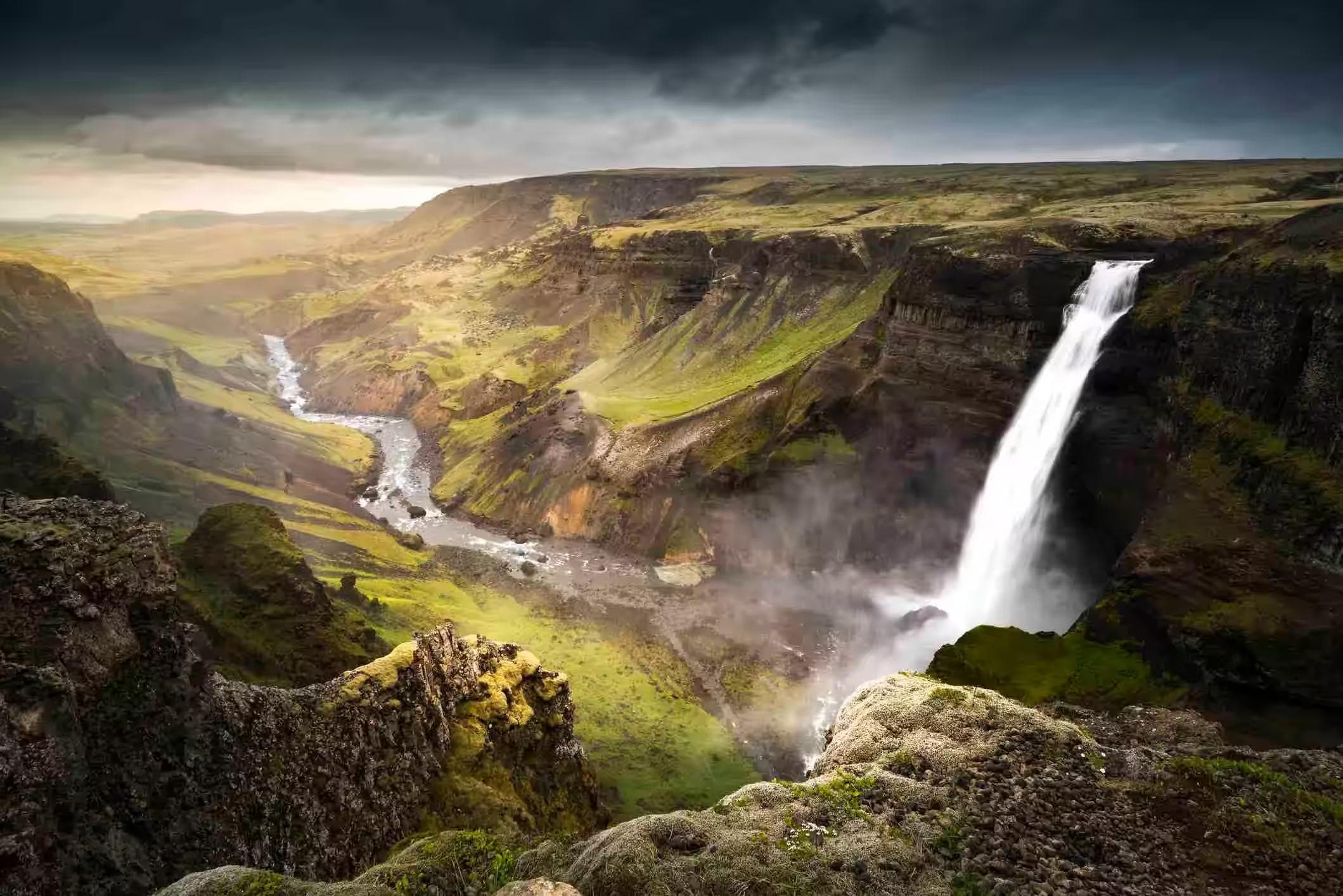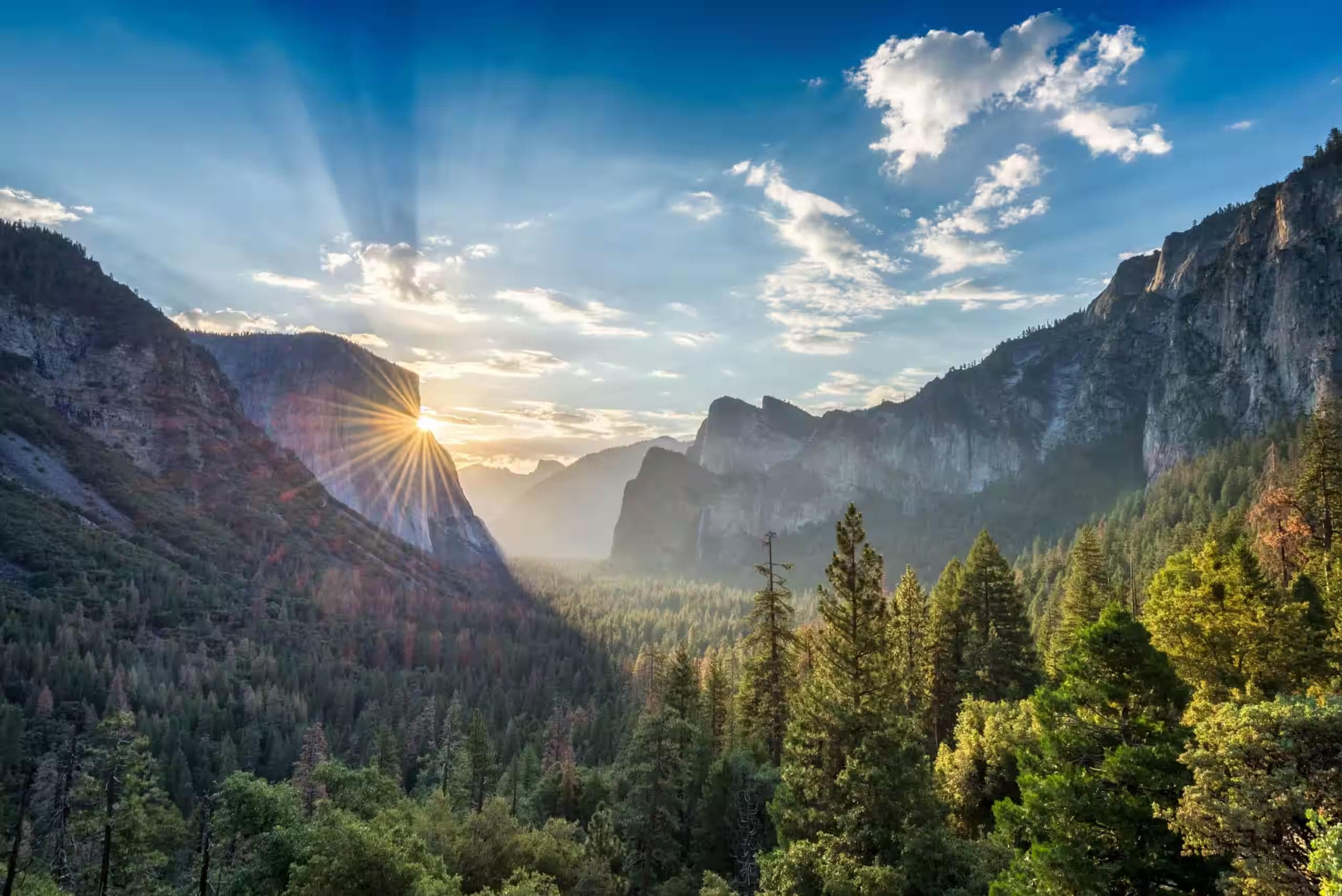
Yosemite Valley at 5:30 am in April belongs to nobody in particular and therefore to everyone willing to wake up for it. The granite walls — El Capitan on the left, Half Dome straight ahead, Cathedral Rocks to the south — catch the first light before the valley floor does, a slow illumination that works top-down, the peaks turning pale gold while the meadows below remain in cold blue shadow. No shuttle buses. No tour groups. Just the Merced River running fast and grey with snowmelt, a family of deer moving through the wet grass near Sentinel Bridge, and the kind of silence that a place this famous rarely gets to have. Three days built around early mornings will show you a Yosemite that the postcard version does not contain.
01Getting There
Yosemite National Park sits in the Sierra Nevada mountains of central California, approximately 300 kilometers east of San Francisco via Highway 120 — a drive of roughly 3.5 to 4 hours depending on traffic through the Central Valley. From Los Angeles, the approach via Highway 140 through Mariposa takes around 5.5 hours. Car rental from either city is the standard approach for international visitors, though in spring and summer, the park operates a timed entry reservation system that must be booked before arrival.
Park Entry & Permits
Entry costs $35 per vehicle for a 7-day pass, or is covered by the America the Beautiful annual pass at $80, worth buying for any US trip involving more than two national parks. A timed entry reservation is required between 5:00 am and 4:00 pm from late April through October; reservations open two months ahead of the entry date and sell out within hours. Set a calendar reminder and book the day reservations open at recreation.gov.
Where to Stay
Three options suited to this itinerary:
- Yosemite Valley Lodge — central, well-positioned for early morning valley access, books months ahead in spring
- Curry Village tent cabins — atmospheric, affordable, cold at night in April; bring a warm layer for the walk to the shared bathrooms
- El Portal — a small town 14 kilometers west of the valley entrance, with several mid-range motels and no booking competition compared to in-park options
All in-park accommodation is managed through Travel Yosemite and opens for booking 366 days in advance. For spring visits, set a reminder for the exact opening date and book the morning it becomes available. Availability disappears within the first hour.
02Day One: Valley Floor
The first day requires no elevation and no exertion beyond walking slowly through one of the most compositionally extraordinary valley floors on the planet. The Yosemite Valley Loop Trail — an 11-kilometer flat circuit tracing both banks of the Merced River — is the correct introduction. Walk it early. Walk it before 7:00 am if possible.
Valley Meadows
The eastern meadows between Sentinel Bridge and Valley View are where the valley reveals its full scale most honestly. Standing in the middle of Cook's Meadow at dawn, the walls on both sides rise nearly 1,000 meters from the valley floor — El Capitan's southwest face to the north, the Cathedral Rocks to the south — and the geometry of it, the sheer vertical compression of that much granite into that narrow a space, does something to spatial perception that photographs consistently fail to communicate. The Ridge 15 Daypack organizes the morning carry here: camera gear, a warm layer for the cold meadow air, the FlowTrail Bottle filled at the lodge before departure, and the WindTrace Neck Gaiter compressed into the top pocket for the 10-minute window between the cold valley floor and the first direct sunlight reaching the trail at around 7:30 am.
Mirror Lake
A 8-kilometer return walk from the eastern end of the valley, Mirror Lake sits at the base of Half Dome's north face and fills with snowmelt through April and May, creating — on windless mornings — a reflection of the dome so precise it is genuinely disorienting to look at. The lake is at its fullest in April; by July, it has largely retreated to a seasonal stream. The path is flat, shaded, and quiet by Yosemite standards, even in peak season. Walk out and back in the early afternoon, after the morning valley circuit, and allow the day to end there.
Yosemite Falls
The walk to the base of Yosemite Falls — at 739 meters, the tallest waterfall in North America — is a 1-kilometer return path from Camp 4 that takes 20 minutes and requires nothing. In April, the falls are running at their maximum spring volume, the roar is audible from 300 meters, and the mist reaches the viewing platform. The spray is cold and arrives without warning. The AeroLite Trail Gloves are the practical answer for the 20 minutes of standing at the base in April mist — light enough to pack flat into the Ridge 15, warm enough to keep fingers functional during an extended photography session in 6°C spray.
The Valley Loop Trail is open to both hikers and cyclists. Bike rental is available at Curry Village and Yosemite Valley Lodge for approximately $15/hour. Cycling the valley floor before the first shuttle buses arrive at 7:00 am is the fastest and quietest way to cover the full loop in a single morning.
03Day Two: Vernal & Nevada Falls
The second day is a climb. The Mist Trail from Happy Isles to Nevada Fall is the most rewarding half-day walk in Yosemite, gaining 600 meters over 7 kilometers through a granite staircase, forested switchback, and open ridge to a viewpoint directly above a 177-meter waterfall. It is fully accessible to beginner walkers with adequate footwear and a reasonable fitness level. It is not casual. Plan accordingly.
Happy Isles to Vernal Fall
The trail begins at the Happy Isles Nature Center, reachable by park shuttle (Stop 16) from anywhere in the valley. The first 1.6 kilometers are a steady uphill path through oak and pine forest before the granite staircase begins in earnest. Vernal Fall — 97 meters, wide and loud — appears through the trees at the top of the first staircase at approximately the 2-kilometer mark. The viewing bridge below the falls is the point at which the trail's name becomes literal: spring runoff produces a mist that saturates clothing within 90 seconds of arriving at the railing. The WindTrace Neck Gaiter doubles here as a face cover against the spray — tucked up over the nose, it keeps the worst of the cold mist off the skin during the 5-minute crossing of the bridge.
Vernal to Nevada Fall
Above Vernal Fall, the trail leaves the mist behind and climbs a long granite staircase to the ridge above. The effort is real. The gradient on the staircase section averages around 30%, and the stone steps are irregular, polished smooth by decades of foot traffic, and frequently wet in spring. Take them slowly. The AeroLite Trail Gloves are useful here for balance on the handrail sections in cold morning temperatures — grip on cold, wet granite without gloves is unpredictable and unnecessary to test.
Nevada Fall appears abruptly at the top of the ridge: a 177-meter freefall into a churning pool at the base, the surrounding granite polished and pale, the sound of it a continuous low pressure that makes conversation require effort. The viewpoint at the lip of the fall, looking back down the valley toward Half Dome, is one of the classic Yosemite compositions — the dome framed between granite walls, the valley floor 1,000 meters below. Spend 20 minutes here. Eat something. Drink from your bottle. Then follow the John Muir Trail back down to the valley for a gentler, longer, more forested descent.
Return via the John Muir Trail
The John Muir Trail descent from Nevada Fall to Happy Isles covers 6 kilometers on a wider, better-graded path through pine and cedar forest with occasional granite viewpoints over the valley. It takes approximately 90 minutes at a comfortable pace. The Summit Trail Cap earns its place on this section — the trail south-faces open sky for the final 2 kilometers, and the afternoon sun at 1,500 meters in late spring is stronger than it feels.
The Mist Trail granite staircase above Vernal Fall is genuinely slippery in spring conditions. Traction devices are not required, but footwear with solid rubber soles is non-negotiable. Flip-flops and flat-soled trainers cause injuries here every season — the park service issues specific warnings. Do not attempt the upper trail in any footwear not designed for uneven wet terrain.
04Day Three: Glacier Point Road
The third day trades valley depth for elevation. Glacier Point — at 2,199 meters, the highest drive-to viewpoint in Yosemite — sits on a granite promontory directly above the valley floor and offers a perspective on Half Dome and the High Sierra that no valley-floor position can replicate. From Glacier Point, Half Dome appears almost eye-level rather than overhead — the dome's northwest face fully visible, the valley 1,000 meters directly below, the Sierra Nevada extending eastward to the horizon in a continuous ridgeline.
Glacier Point Road
The Glacier Point Road opens seasonally — typically late May or early June, depending on snowpack — which means early April visits will find it closed. Check the current road status before planning this day. If closed, substitute the Sentinel Dome walk from the Taft Point trailhead, lower on the road, which opens earlier and offers comparable elevation.
Sentinel Dome
The walk to Sentinel Dome covers 3.2 kilometers return from the Taft Point trailhead, gaining 150 meters to a granite dome at 2,474 meters with a 360-degree view of the park. It takes 90 minutes. The summit is fully exposed and, in spring, still carries patches of snow on the north-facing side of the dome. The wind at the summit moves differently from valley wind — steady, cold, unimpeded — and the combination of the AeroLite Trail Gloves, WindTrace Neck Gaiter, and Summit Trail Cap works together here as a coherent system: gloves for the cold summit approach, gaiter for wind cover on the exposed dome top, cap for the sun exposure on the descent.
Final Morning
Return to the valley by noon. Buy coffee at the Village Store and walk back to Sentinel Bridge one final time. The light in the valley by late morning is completely different from the dawn version — flatter, warmer, more ordinary — and that difference, felt directly across three consecutive mornings, is its own kind of education. The postcard version of Yosemite is real. It is just most real at 5:30 am, before the shuttles run and the crowds form and the walls go back to being scenery rather than something you are inside of.
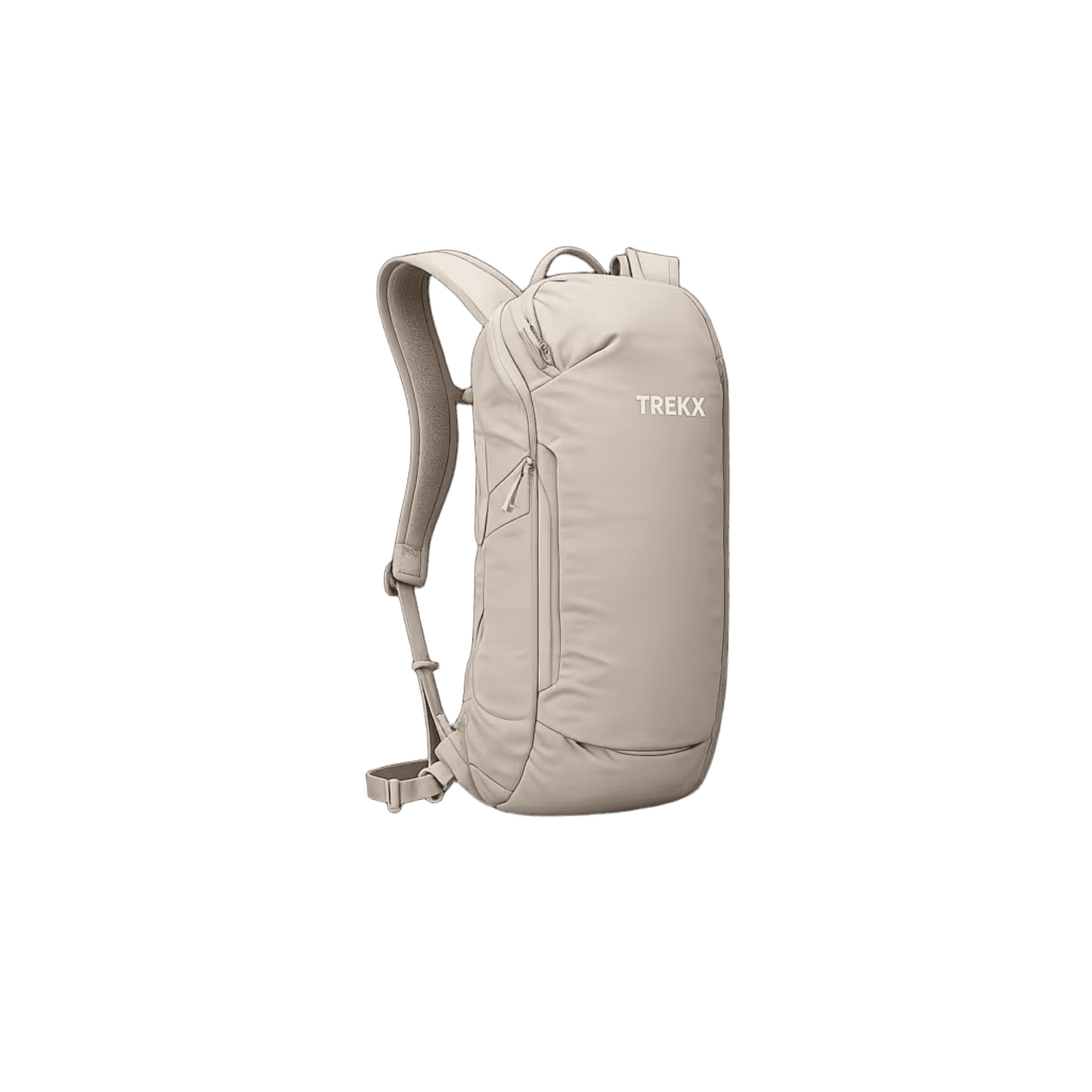
Ridge 15 Daypack
Carries camera gear, morning layers, water, and snacks across all three days
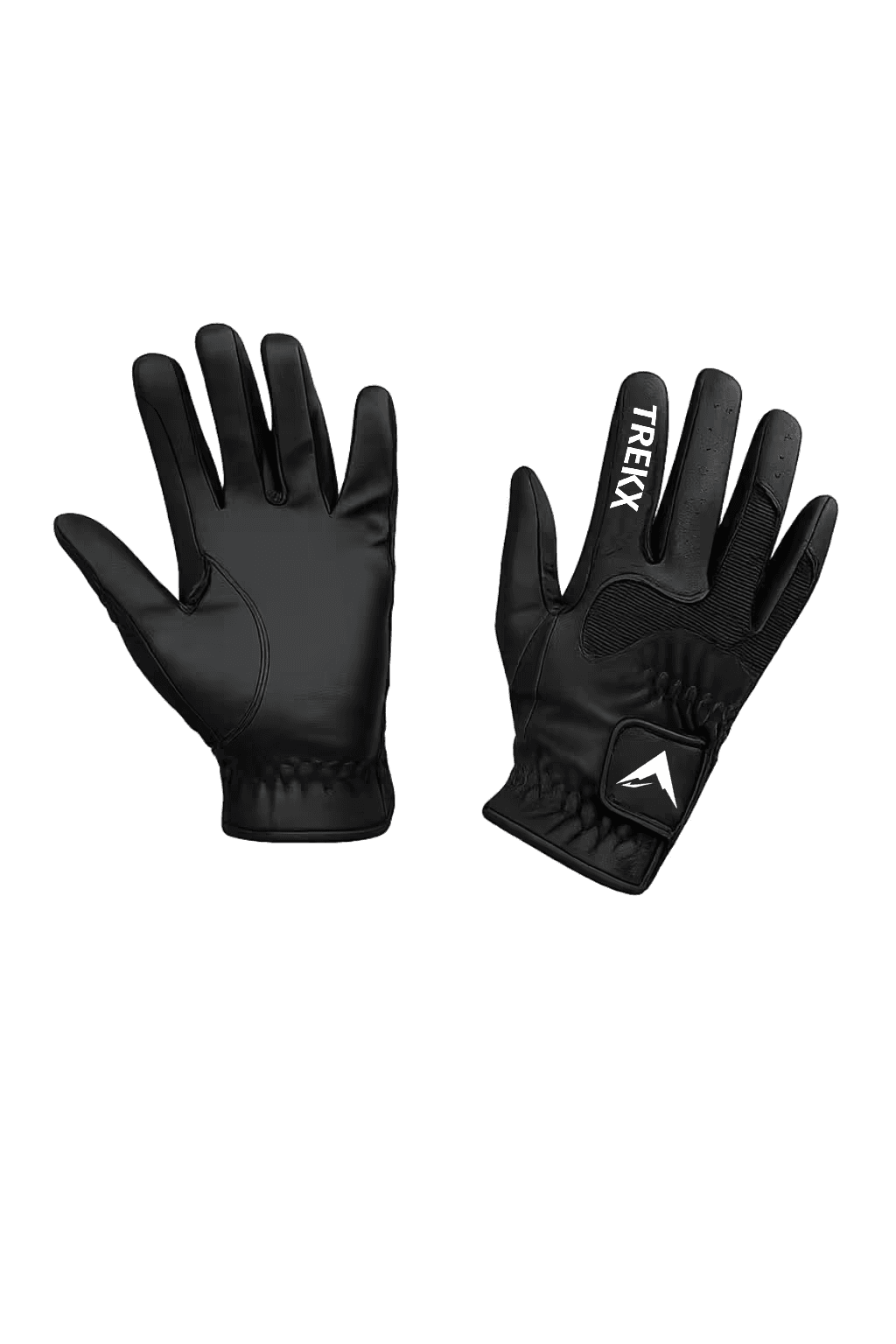
AeroLite Trail Gloves
Keeps hands warm and functional during cold morning starts and Mist Trail spray exposure
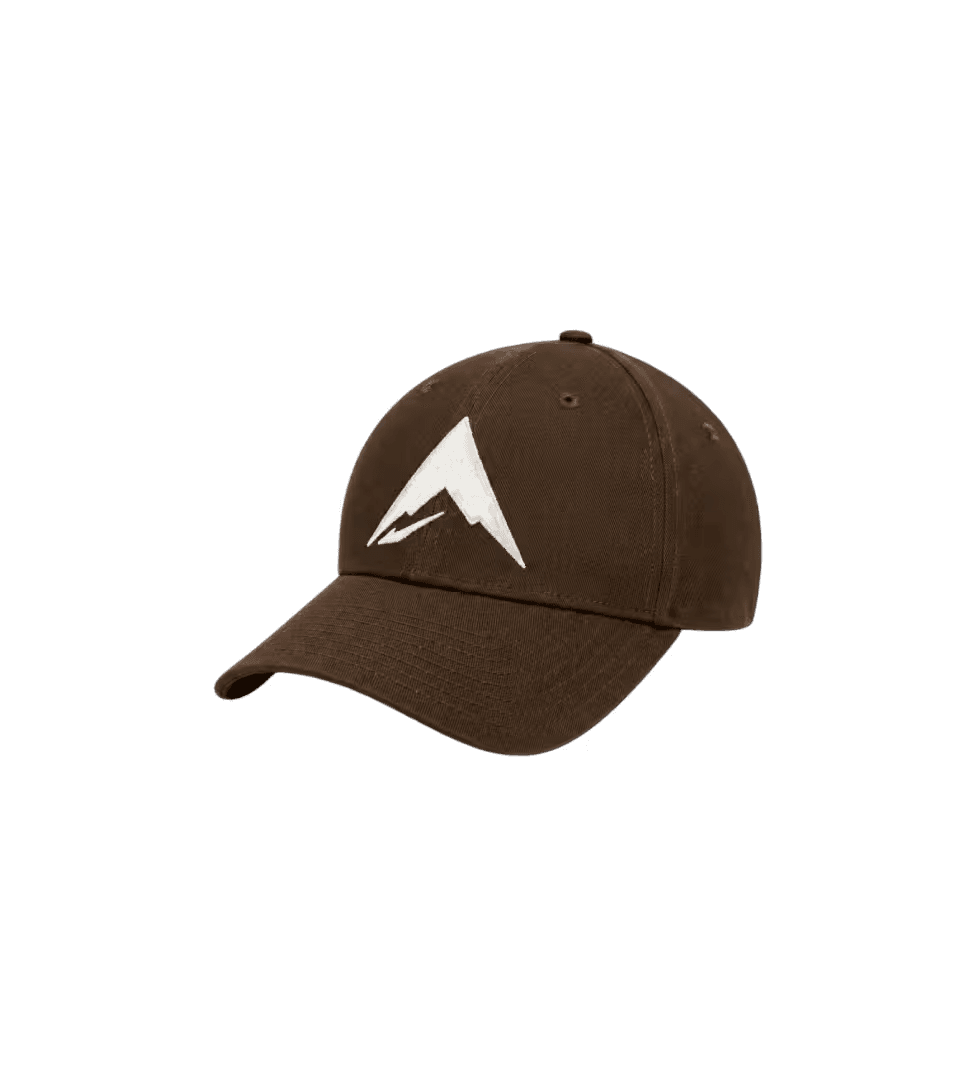
Summit Trail Cap
Three days of afternoon sun exposure on south-facing granite trails and open summit approaches
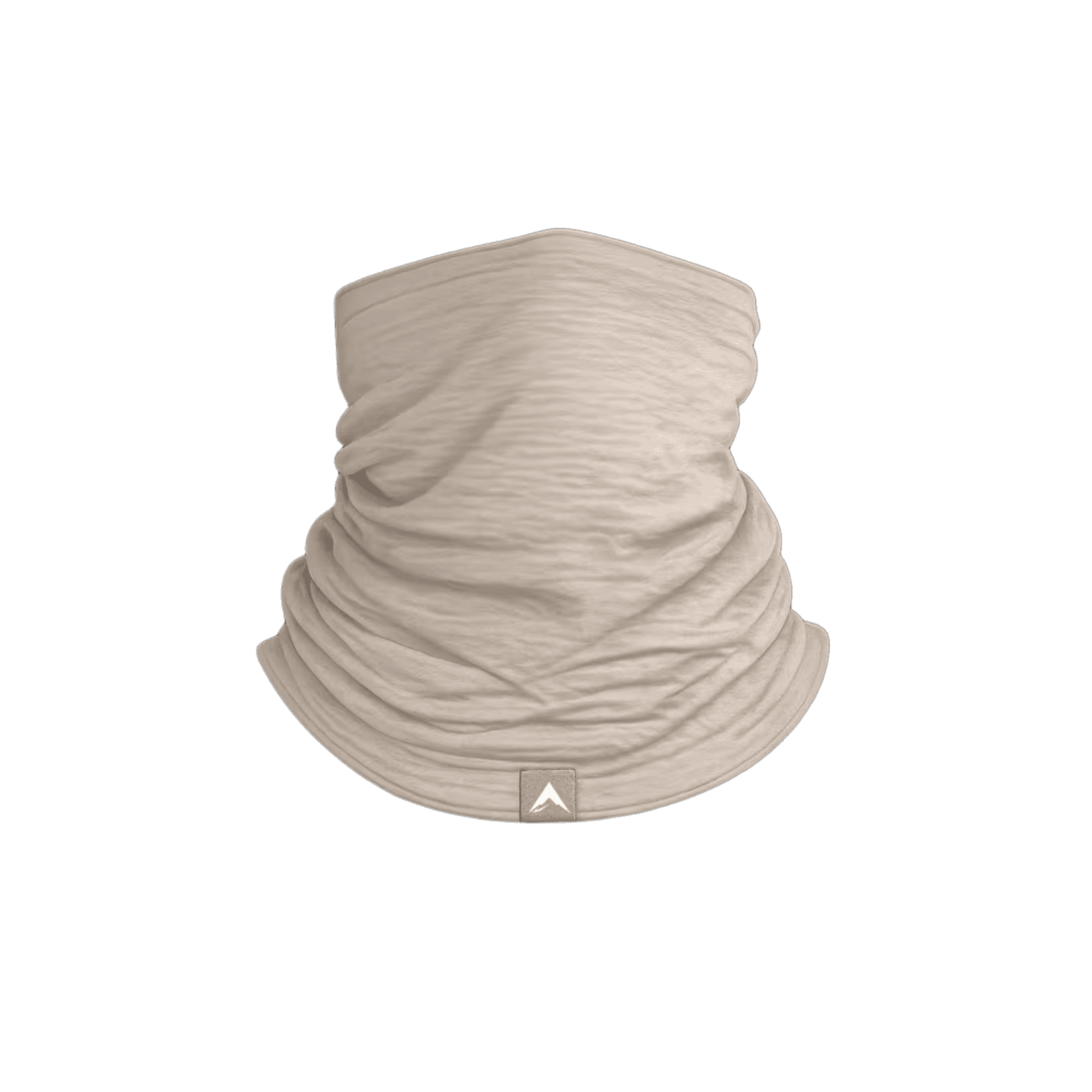
WindTrace Neck Gaiter
Covers the temperature gap between cold valley dawn and warm mid-morning