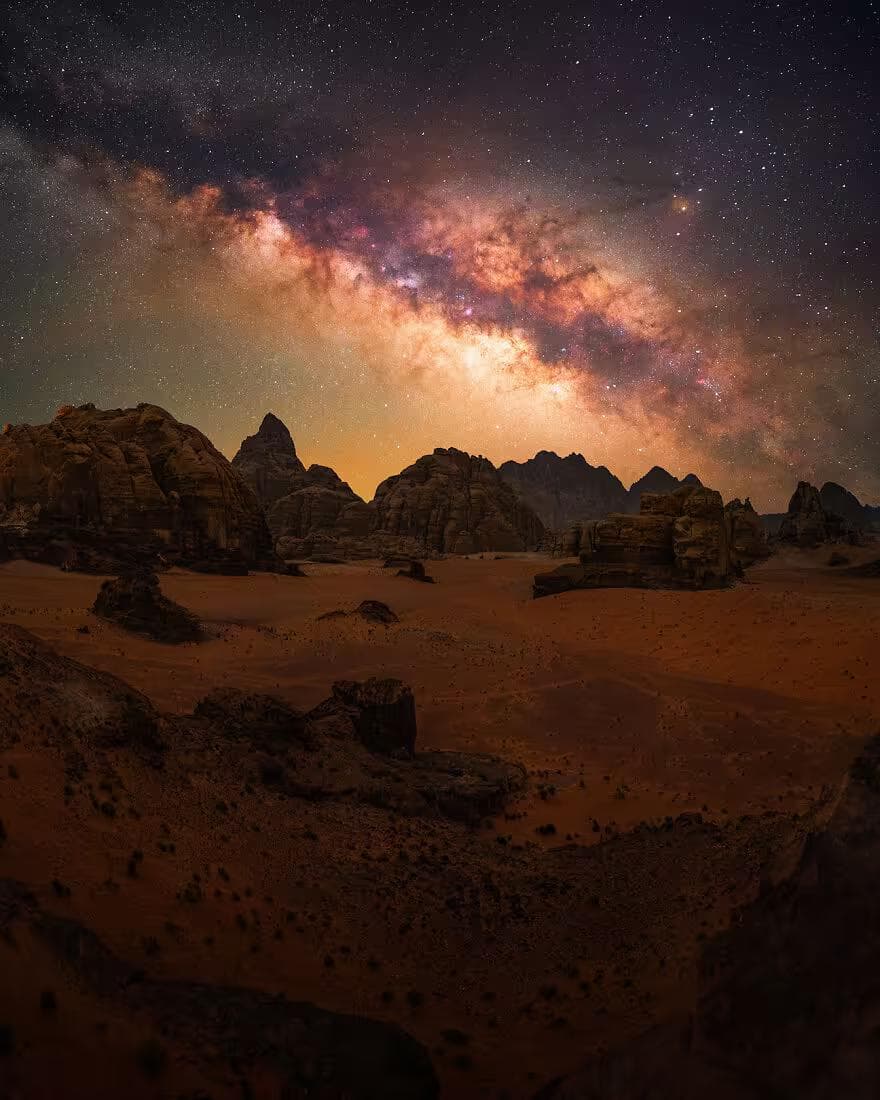
The sand in Wadi Rum is not beige. It is a deep iron-oxide red that shifts toward orange at midday and darkens to burgundy in the late afternoon shadow of the sandstone massifs. Walking through it produces a specific sensory experience that no amount of desert photography prepares for: the silence is total in a way that mountain silence is not, because mountains have wind and water and vegetation movement, and the desert in the middle of the day has none of these things — just heat, and the sound of sand compressing underfoot, and the immense geological patience of rock that formed 500 million years ago and has been waiting since. Wadi Rum is 720 square kilometers of this. Four days inside it, on foot and by camel, guided through a landscape that does not tolerate navigational improvisation, produces a recalibrated understanding of distance, scale, and what the body requires when the environment offers nothing.
01Wadi Rum Logistics
Wadi Rum Protected Area is a UNESCO World Heritage Site covering the southern portion of the Rum desert in Aqaba Governorate, 320 kilometers south of Amman and 60 kilometers north of Aqaba. The protected area requires a visitor permit — purchased at the visitor centre at the desert entrance for JOD 5 per person — and all multi-day trekking inside it must be arranged through a licensed Bedouin guide. This is not optional or bureaucratic: navigation in Wadi Rum without local knowledge is genuinely dangerous. The desert's landmark massifs — Jebel Rum, Jebel Khazali, Burdah Rock Bridge — are visually distinctive but directionally disorienting in shifting light, and the sand surface obscures the distinction between navigable terrain and unstable ground.
Guides & Camp
The Bedouin communities of Wadi Rum have operated desert guiding for generations, and the licensed operator network is well-organized. Wadi Rum Wild, Rum Stars Camp, and Mohammed Mutlak are among the established licensed operators offering four-day itineraries combining trekking, camel transport, and traditional Bedouin camp accommodation. Expect to pay JOD 80–120 per person per day, all-inclusive for a guided four-day program with meals, camp, and camel transport for the longer sections. Book at least four weeks ahead for March and April; the spring season fills quickly from European markets.
Getting There
- From Amman — JETT bus from Amman South Terminal to Aqaba, approximately 4 hours. Local taxi or minibus from Aqaba to Wadi Rum village, 60 kilometers, approximately 1 hour.
- From Petra — shared taxi from Wadi Musa to Wadi Rum village, approximately 1.5 hours. The Jordan Pass covers Petra entry and the Wadi Rum visitor permit and is worth purchasing for any itinerary combining both.
- By rental car — the Desert Highway (Route 15) south from Amman to the Wadi Rum turn-off is well-maintained and clearly signed.
Purchase the Jordan Pass before arrival in Jordan. It covers the Wadi Rum entrance fee, Petra entry for multiple days, and the tourist visa fee — a combined saving of approximately JOD 45–65 per person, depending on nationality and Petra visit duration.
02Day One: Village to Khazali Canyon
Distance: 12km | Elevation change: minimal | Estimated time: 5–6 hours walking
The first day orients to desert movement — a different physical grammar from mountain or forest trekking, which the body takes several hours to find. Sand walking requires a shortened stride, a flatter foot strike, and a pace that the heat enforces regardless of intended speed. The guide sets the pace from the first hour, and the correct response is to follow it exactly rather than push against it. Desert experience lives in pace management in a way that alpine experience lives in equipment management.
Morning Start
Departure from the Wadi Rum village at 6:30 am — before the sun clears the eastern massifs and before the temperature climbs above 22°C. The first two hours are the productive window: cool, clear, the sand still firm from overnight cold, the light horizontal and warm on the sandstone faces. The FlowRidge Hydration Pack is filled — 2 liters — before departure. In Wadi Rum in April, 2 liters covers the morning section to the midday rest point. It does not cover the full day. The guide carries additional water on the camel for the afternoon refill. Drink continuously, not reactively — thirst signals in desert heat lag the actual dehydration state by 30–45 minutes.
Lawrence's Spring
The route passes Ain Lawrence — the spring that T.E. Lawrence described in Seven Pillars of Wisdom and used as a water source during the Arab Revolt — at the 4-kilometer mark. The spring emerges from the base of a sandstone cliff and supports a small patch of vegetation that reads as implausibly green against the surrounding red desert. It is the only natural water source on this section of the route and a useful marker for navigation context. The PureFlow Water Filter — carried on this itinerary for the canyon section — draws from this spring reliably. Desert spring water is not automatically safe: Bedouin goat and camel use of water sources throughout the year introduces contamination that visual clarity does not reveal.
Khazali Canyon
Khazali Canyon is a narrow 100-meter slot in the base of Jebel Khazali — a crack in the sandstone wide enough for one person at a time, its walls covered in Nabataean and Thamudic inscriptions dating from 2,000 years ago, the interior cool and dim while the desert outside runs at 32°C. The inscriptions — petroglyphs of ibex, human figures, and Arabic script — are at eye level throughout the canyon's length, carved by travelers who stopped at this spring for the same reason that travelers stop here now: water, shade, and the specific relief of stone walls after open desert.
The WindTrace Neck Gaiter is first deployed at Khazali's entrance — not for wind but for the fine canyon dust that the narrow walls concentrate with each gust of desert air. The gaiter pulled up over the nose and mouth during the canyon crossing keeps the fine sandstone particles out of the respiratory system in a way that breathing through a shirt collar does not. It folds flat into a hip pocket between uses and is the category of small textile solution that desert conditions make meaningful in ways that temperate trekking does not.
03Day Two: Burdah Rock Bridge
Distance: 8km approach + scramble | Elevation gain: 200m scramble section | Estimated time: 6–7 hours
The second day's destination is the most technically demanding section of the itinerary: the Burdah Rock Bridge — a natural sandstone arch at 1,750 meters, the highest accessible natural rock bridge in Wadi Rum, requiring a 200-meter scramble on exposed sandstone above the desert floor. The approach by camel covers the flat desert section between the previous night's camp and the base of Jebel Burdah in approximately two hours — the camel's pace is slower than walking and more energy-efficient in full desert heat, the elevated position providing a view across the sand plain that foot level does not.
The Scramble
The ascent to Burdah Bridge from the Jebel base is the most exposed section of the itinerary. The sandstone holds grip well in dry conditions — the friction is reliable on the angled slabs — but the route is not marked, and following the guide's line exactly is non-negotiable. Three sections above 100 meters require using both hands on the rock face. None is technically difficult. All have consequences if the footing is misjudged.
The SummitShade Sunglasses are the critical piece of gear on this ascent. The sandstone reflects UV at an intensity that the UV index — typically 8–10 in Wadi Rum in April — does not fully communicate. Looking down at pale sandstone under direct sun from 1,500 meters produces eye fatigue within 40 minutes that affects balance and depth perception on the exposed slab sections. The sunglasses are not a comfort item in this section. They are a performance one.
The Bridge View
The Burdah Bridge at 1,750 meters delivers a 360-degree view of the Rum desert that no valley-floor position approximates: the massifs below appear as islands in a red sand sea, their scale reduced by elevation to something the eye can process simultaneously rather than individually, the protected area's boundaries visible as a change in terrain texture at the edges of the red basin. The wind at the bridge is the desert wind at altitude — dry, strong, and directionally consistent from the northwest. The WindTrace Neck Gaiter covers the face during the 20-minute rest at the bridge, where the wind's desiccating effect on exposed skin is faster than it registers.
The Burdah Bridge scramble requires dry rock. In the rare event of rain in Wadi Rum — possible but infrequent in March — the sandstone surface becomes dangerously slick within minutes of moisture contact. If rain falls during the ascent, stop immediately and descend to the base with the guide. Do not attempt to continue to the bridge in wet conditions, regardless of proximity to the top. The descent line from the bridge in wet sandstone has no safe option.
04Day Three: Jebel Um Adaami Approach
Distance: 14km | Elevation gain: 600m | Estimated time: 6–7 hours
The third day moves south toward the Saudi border and the Jebel Um Adaami massif — at 1,854 meters, the highest peak in Jordan — for an approach walk through the most remote and least-visited section of the protected area. The route does not summit Um Adaami on this itinerary; it traverses the massif's eastern flank through a landscape of red dunes, sandstone canyons, and the specific quality of silence that distance from the village produces in a desert this flat.
Desert Silence
By day three, the desert silence has become familiar enough that the occasional camel bell from the guide's animal is noticeable rather than ambient. The Rum desert at 10:00 am on a windless April day produces a sound environment that most people have not experienced: no birds, no water, no vegetation movement, no distant traffic. Just the sound of footfall on sand and the internal noise that the absence of external sound amplifies. This is the environment that Bedouin culture has organized itself around for centuries — the silence is not empty, it is informational — and walking inside it for a full day produces an attention to sensory detail that urban environments suppress entirely.
Camp Preparation
The third night's camp is the most remote — a Bedouin tent camp in the desert interior, no facilities, no lighting beyond what the party carries. The GlowClip Trail Light is the functional answer to a camp that the midnight dark of a desert without light pollution makes genuinely dark — the clip mechanism attaches to a tent pole, a jacket zip, or a camel pack loop, providing directional light for the cooking area, the tent entrance navigation, and the short walk to the camp perimeter that the night sky — spectacular and dense with stars at this latitude, this altitude, and this distance from artificial light — makes worth taking.
The Wadi Rum night sky in spring is one of the clearest in the Middle East. The protected area's absence of light pollution, combined with the desert air's low humidity, produces star visibility that includes the Milky Way as a structural feature rather than a faint suggestion. Spend 30 minutes outside the tent after dinner — away from the GlowClip's light — before sleeping. The dark adaptation takes 15 minutes, and the result is worth the cold.
05Day Four: Return to Village
Distance: 16km | Estimated time: 5–6 hours walking and camel
The final day returns to Wadi Rum village across the northern plain — the longest distance day and the one that most clearly demonstrates what four days of desert acclimatization produce. The pace that felt demanding on day one is now the body's natural rhythm. The heat that felt oppressive on day one is now a managed condition. The sand that looked uniform from the village entrance now reads as varied terrain: the firm interdune corridors, the loose scree-sand transition zones, the consolidated sandstone pavements where pace can increase without the energy cost of soft ground.
Final Hours
The SummitShade Sunglasses and WindTrace Neck Gaiter complete their fourth consecutive day of active use on the return — the combination of UV exposure and fine desert wind on the northern plain's open section is the most sustained exposure of the itinerary, with no canyon shelter and no massif shade between the camp departure point and the village arrival. The FlowRidge's final fill from the guide's water reserve at the morning camp covers the full return distance. Arrive at the visitor centre by 2:00 pm before the afternoon heat peak.
Dinner in the village that evening — lamb mansaf, the Jordanian national dish, served on a communal tray in the traditional manner — is the correct conclusion to four days of Bedouin hospitality and desert walking. The drive north to Aqaba or Amman begins the following morning. The desert, visible from the car window as the road climbs north through the precordillera, looks different from the outside after four days inside it: smaller, more containable, nothing like what it actually is.
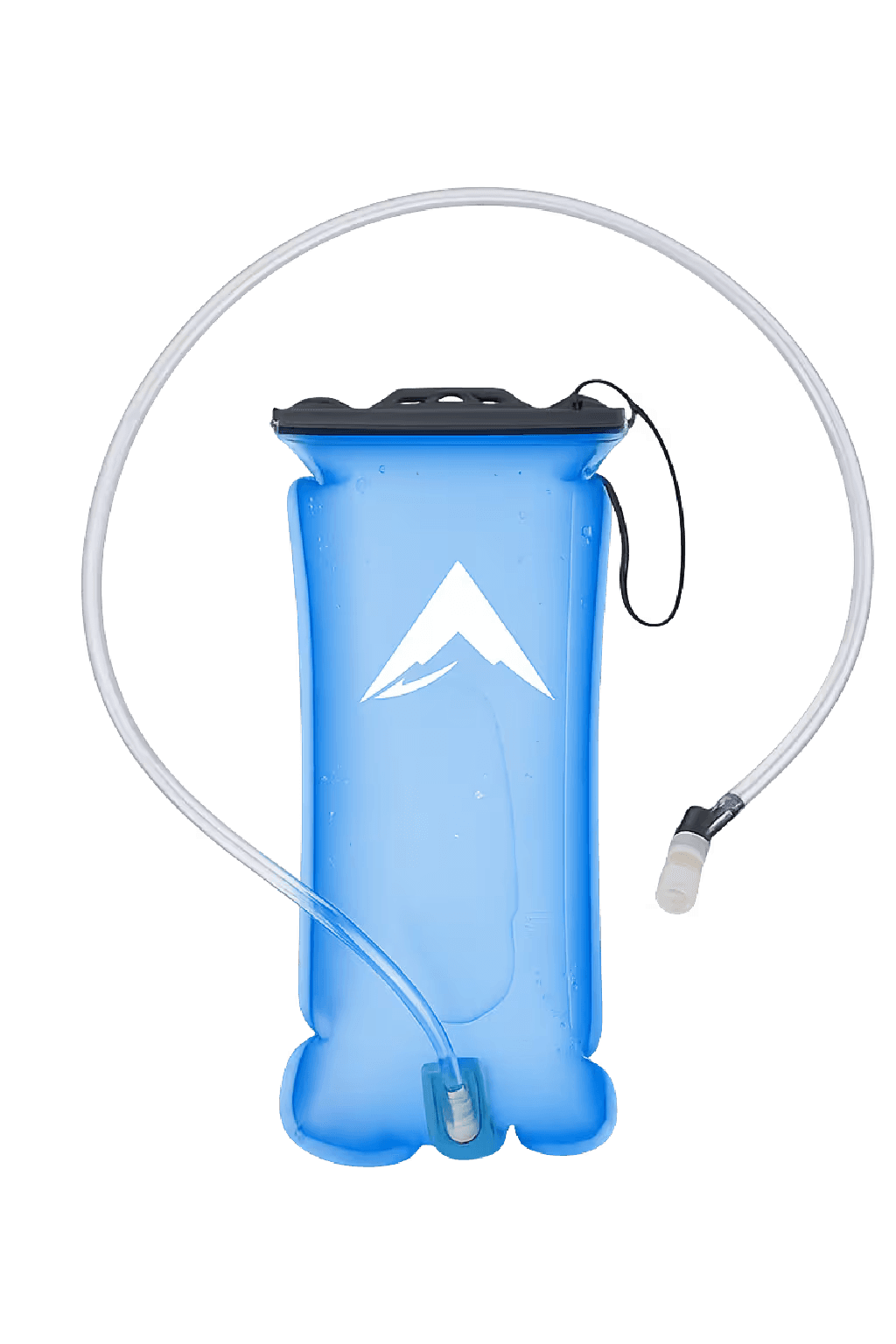
FlowRidge Hydration Pack
Two-liter continuous drinking capacity across daily desert distances where thirst signals lag actual dehydration by 30–45 minutes
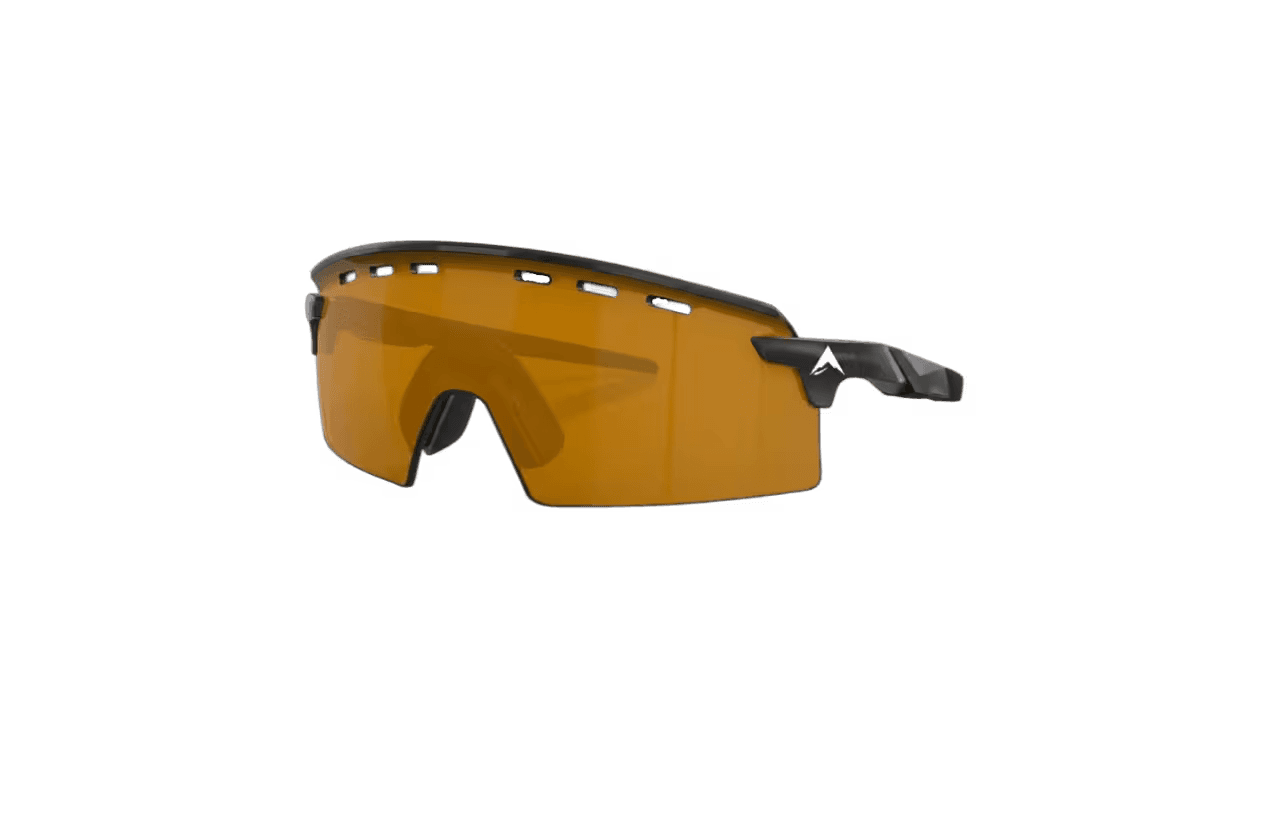
SummitShade Sunglasses
Blocks the UV reflection off pale sandstone at altitude that affects balance and depth perception on exposed scramble sections
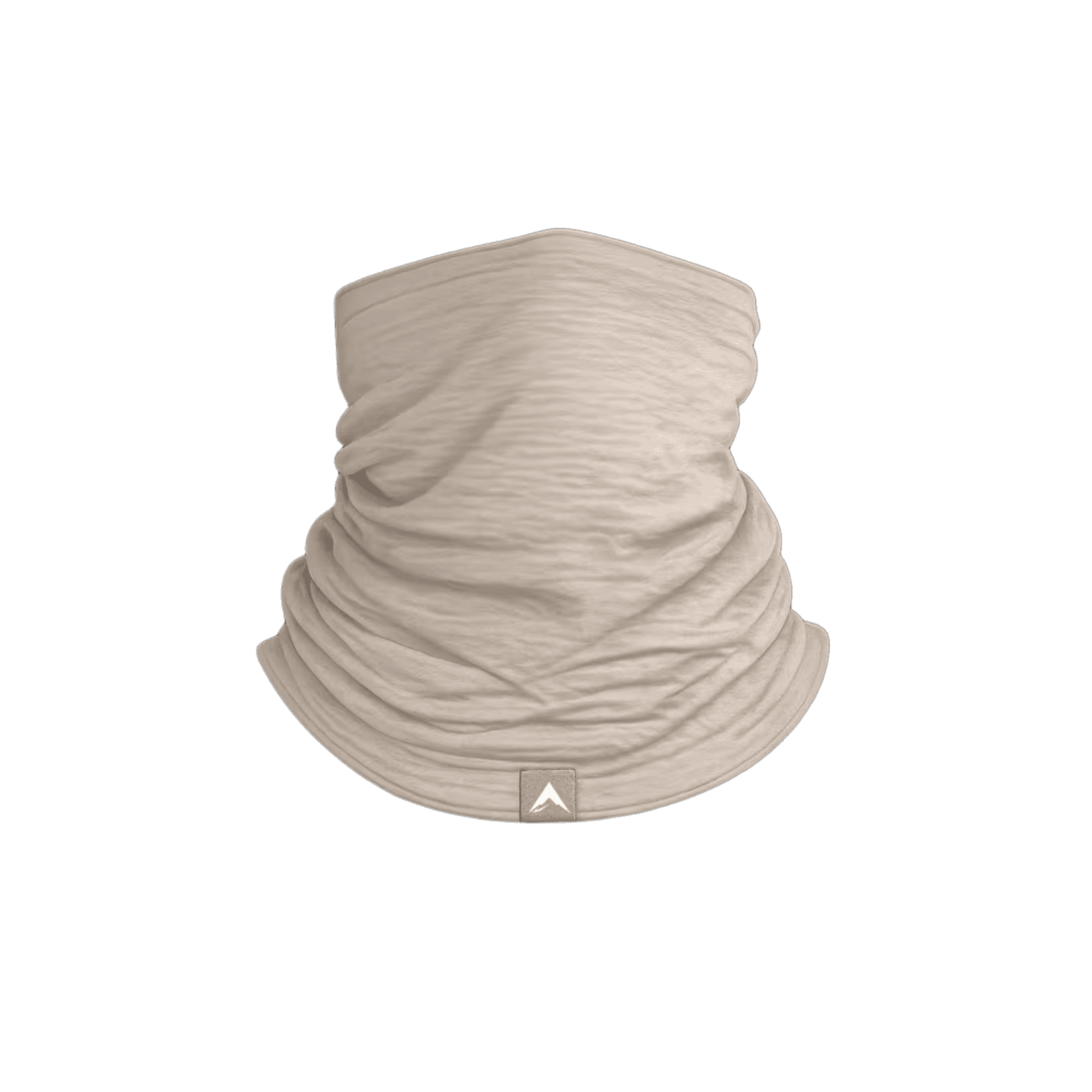
WindTrace Neck Gaiter
Covers the nose and mouth against canyon dust in Khazali and against the desiccating northwest wind at the Burdah Bridge
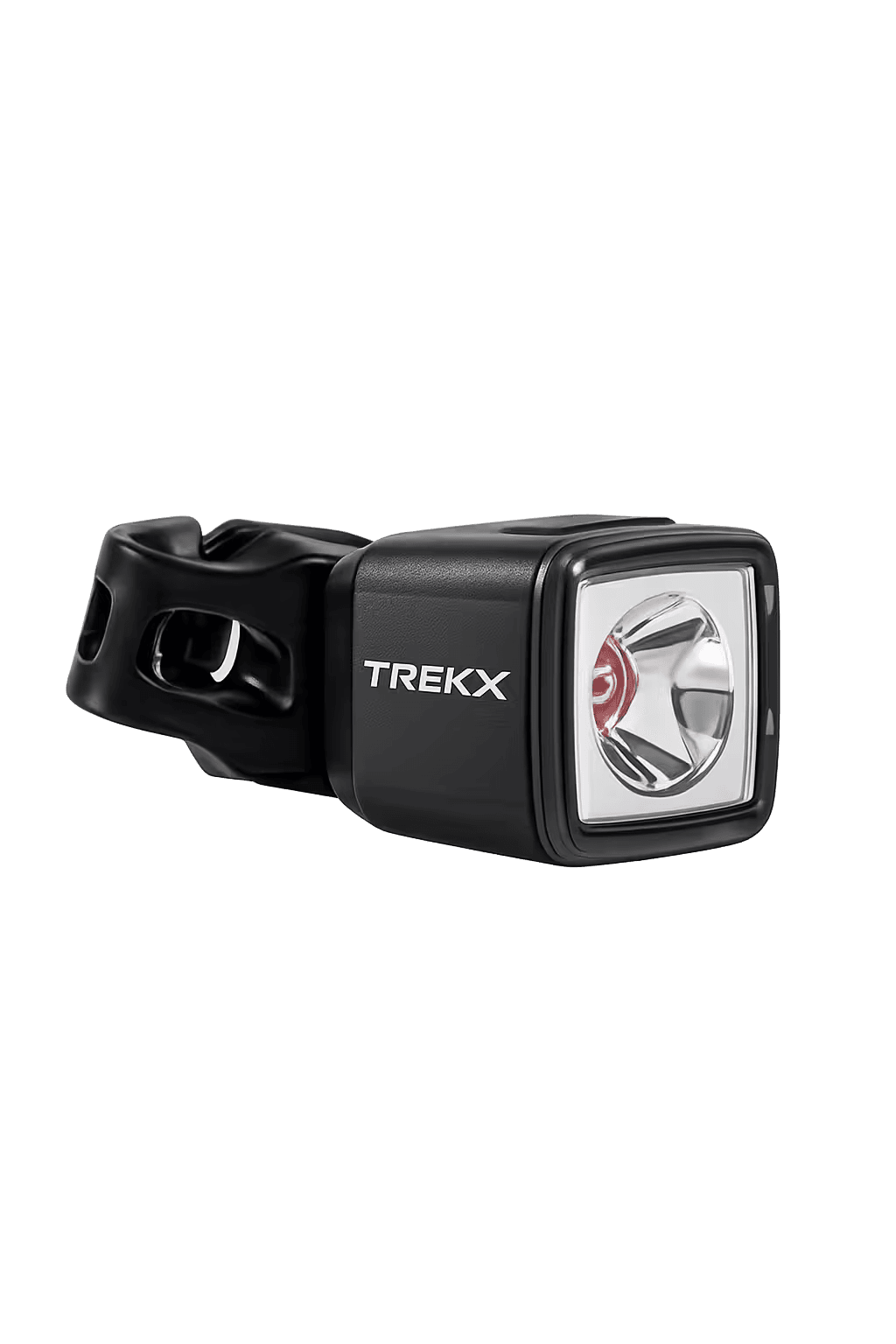
GlowClip Trail Light
Clips to tent pole or jacket zip at the remote interior camp where total desert darkness makes navigating a genuinely dark proposition