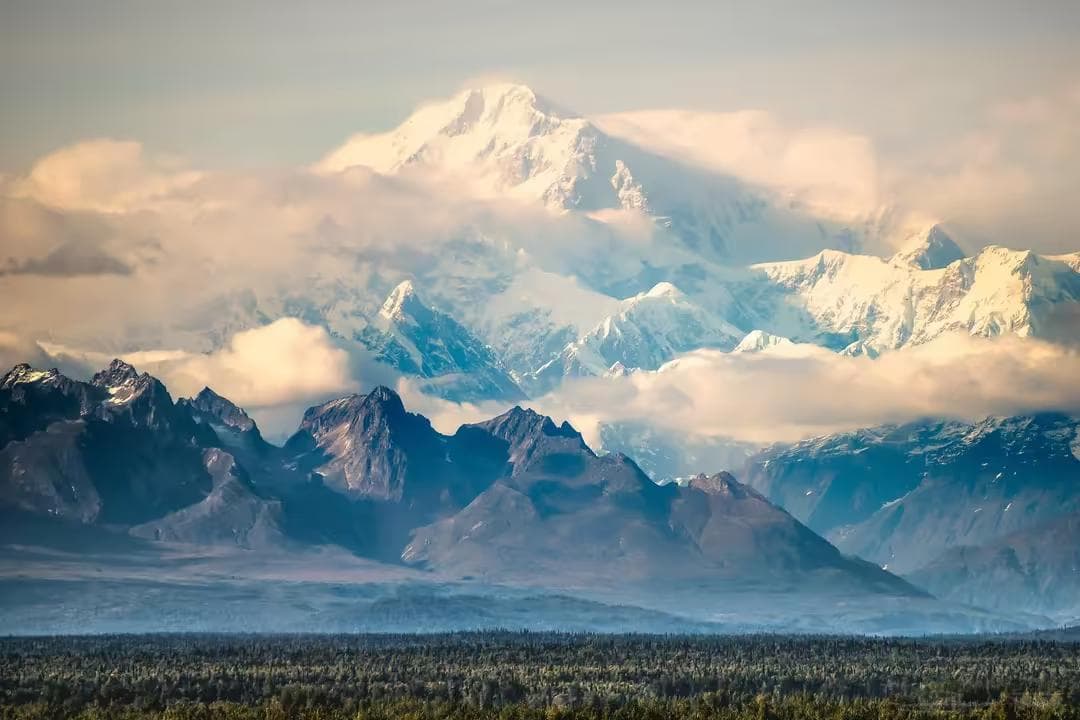
Denali does not allow incremental mistakes. At 6,190 meters — the highest point in North America, situated at 63 degrees north where the polar atmosphere compresses the effective altitude by an additional 1,000 meters above the physical elevation — the margin between a decision that works and one that doesn't is measured in hours rather than days. The mountain's weather system is self-generated: Denali's mass intercepts the Pacific and Arctic air streams simultaneously, producing storm cycles that arrive without the barometric preparation that most alpine environments provide and that can deposit 2 meters of snow on the upper mountain in 36 hours. Most Denali expeditions spend more time in tents waiting for the weather than they spend moving. The expeditions that succeed are the ones that treat the waiting as part of the strategy rather than a failure of it.
This guide covers the West Buttress route — the standard and most attempted line on Denali, first completed by Bradford Washburn in 1951 — from the Kahiltna Glacier landing at 2,200 meters to the summit at 6,190 meters across a 21-day framework. It is written for alpinists with documented glacier travel experience, confirmed high-altitude competency above 5,000 meters, and the physical and psychological preparation for a three-week commitment in one of the most weather-volatile high-altitude environments on earth. The West Buttress is technically moderate by the standards of Denali's other routes. It is not moderate by the standards of anything else in this guide series except K2 and Everest — and unlike those mountains, Denali's self-sufficiency requirement removes the commercial infrastructure that Himalayan expeditions provide.
01Permit & Pre-Expedition Framework
The Denali climbing permit is issued by the Denali National Park & Preserve at USD $400 per person for expeditions attempting the summit. The permit requires:
- Online registration at recreation.gov, a minimum of 60 days before the expedition start date
- Expedition leader designation with documented mountaineering history
- Human waste management kit — the NPS requires all human waste above the 14,200-meter camp to be packed out in Clean Mountain Cans, issued at the ranger station
- Mandatory check-in at the Talkeetna Ranger Station before the Kahiltna flight
The ranger station check-in is not a formality. The NPS rangers conduct a genuine expedition assessment — reviewing gear lists, discussing the team's altitude history, and providing current route conditions from the reports of expeditions already on the mountain. The rangers have seen every category of underprepared expedition attempt Denali. Their assessment of a team's readiness is the most accurate pre-expedition evaluation available and should be received as information rather than bureaucracy.
Talkeetna
Talkeetna — the staging town 150 kilometers north of Anchorage — is the expedition's operational base for the days before the Kahiltna flight. The Talkeetna Ranger Station opens at 8:00 am daily during the climbing season. The Talkeetna Roadhouse provides the pre-expedition breakfast that the mountain's departure eliminates for three weeks. K2 Aviation and Talkeetna Air Taxi operate the Kahiltna flights — book the air taxi before confirming permit dates, as the two systems must align, and the air taxis fill in February for the May peak season.
The Titan Ridge Expedition Pack at 100L is paired with the pulk sled system for Denali — the same configuration described in the Alaska guide, modified for the West Buttress' steeper upper sections, where the sled is cached at 4,300 meters, and the pack carries the summit load alone. Pack weight at the Kahiltna: approximately 35–40 kilograms on the pack plus the sled load. The carry-and-cache system that the West Buttress requires — carrying half the load to the next camp, caching, returning, carrying the second half — means every section of the route is walked twice in each direction. The total distance traveled on a standard West Buttress ascent is approximately 120 kilometers, not the 60-kilometer one-way route distance. Pack weight management is not a comfort consideration. It is the physiological budget that determines whether the team reaches the summit with capacity remaining.
The Denali Basecamp weather forecast from the National Weather Service Alaska is updated twice daily and is the operational standard for route decision-making on the mountain. Track it from Talkeetna onward and build the mental model of the mountain's weather cycle before the first storm arrives at Camp III. The pattern recognition that the forecast history provides is the tool that turns a weather delay from a passive wait into an active strategy.
02Kahiltna to Camp III: Days One–Ten
The Kahiltna landing establishes the expedition's operational baseline. The temperature at the landing strip in late April averages -10°C at noon and -25°C overnight — comfortable by the standards of the upper mountain, cold by the standards of anything the approach from Talkeetna produced. The CoreHeat Expedition Layer and Tempest GTX Bib Pants go on at the aircraft door and do not come off until the tent is pitched and the stove is running.
The Aether UL Shelter is the tent system for the Kahiltna and lower mountain camps — the weight reduction is meaningful on the carry-and-cache days, where every kilogram on the pack multiplies through the doubled distance. Its ultralight construction requires the snow wall protocol at every camp: walls on three sides, 1.2 meters high, constructed before any other camp task. On Denali, the snow wall is the first task because the storm that requires it does not announce a schedule.
Camp I to Camp III
The standard West Buttress camp schedule:
- Kahiltna Base = 2,200m = Glacier flat
- Camp I = 2,350m = Southeast Fork junction
- Camp II = 3,050m = Above Ski Hill
- Camp III = 3,700m = Kahiltna Pass
Each camp transition involves the carry-and-cache protocol — the rhythm of Denali travel that no prior expedition experience fully prepares for because no other mountain at this latitude and elevation combines the load weight, the carry distance, and the cold management simultaneously. The body adapts to it by day four. Days one through three test the adaptation before it arrives.
The FangGrip Crampons are deployed from Camp I onward — the Ski Hill section between Camp I and Camp II is a 700-meter sustained slope at 25–35 degrees, where the ski descent that many teams use on the carry requires edge control that crampons provide on the boot-only carries. Check crampon binding tension at each camp before departure — the temperature drop between camps reduces rubber component flexibility progressively, and a crampon that was correctly tensioned at 2,200 meters may have lost meaningful clamping force by 3,700 meters at -30°C.
Windy Corner
Windy Corner at 4,350 meters — the traverse below the ridge that marks the entrance to the West Buttress proper — earns its name on every expedition that crosses it in weather. The corner amplifies the prevailing northwest wind through the ridge geometry, producing gusts that exceed 80 km/h on otherwise moderate weather days. The Tempest GTX Pro Shell is fully sealed — hood cinched, wrist closures tightened, all zips confirmed — before the corner traverse begins. A shell that is not fully sealed at Windy Corner in the weather allows wind penetration that the insulation layer below cannot compensate for. The corner is 400 meters of exposed traverse. Move deliberately, maintain pole contact, and do not stop in the middle section.
Seracs above the Kahiltna Glacier between base camp and Camp I release without visual warning in spring when solar warming destabilizes the hanging glacier faces above the route. The hazard zone is approximately 800 meters wide and is marked by the NPS with flags at the edges. Move through it continuously — no stops, no photography, no pack adjustments. The flags mark the boundaries of the documented fall zone, not a safe corridor within it. Move fast, move straight, move through.
03Camp III to High Camp: Days Eleven–Fifteen
Above the Windy Corner cache at 4,350 meters, the West Buttress route gains the ridge proper and follows a series of fixed rope sections to Camp IV — the high camp — at 5,240 meters. The fixed lines are installed by early-season expeditions and maintained by the NPS ranger team based at the 4,300-meter camp. The Vertical Core Ascender Kit manages the steeper fixed rope sections efficiently at the altitude where arm strength supplemented by ascender mechanics covers the energy deficit that 5,000 meters of altitude produces.
Camp IV: High Camp (5,240m)
Camp IV at 5,240 meters is the operational center for the summit push. The effective altitude here — accounting for the polar atmospheric compression at 63 degrees north — is equivalent to approximately 6,200 meters at Himalayan latitudes. The physiological experience of Camp IV on Denali more closely resembles the South Col on Everest than it does any alpine camp in Europe. Rest, hydration, and the weather window management that the summit push requires are the only tasks at this elevation.
The Inferno X Expedition Stove runs continuously at high camp — the water production from snow melting at 5,240 meters in -35°C ambient is the expedition's primary physiological management tool. Dehydration at altitude is the most common performance degrader on Denali's upper mountain, and the stove efficiency that the Inferno X's windscreen provides in the vestibule cooking position is the system that keeps the 4-liter daily hydration target achievable. Run the stove in the vestibule with the inner door cracked — the carbon monoxide risk in a sealed tent at high altitude is the same risk described in the Alaska guide, and the same protocol applies: the stove stops before the ventilation does.
The Summit Medic Pro Kit receives a specific inventory check at Camp IV before the summit push. Above 5,240 meters, the medical emergency scenarios that are manageable lower on the mountain require a different response: HACE and HAPE at this elevation require immediate descent, not treatment in place, and the descent from 6,190 meters to 5,240 meters and onward to 4,300 meters is a multi-hour committed movement in the condition that produced the emergency. The medical kit at high camp provides stabilization for the descent; it does not provide the hospital capability that the descent is attempting to reach.
The NPS ranger station at 4,300 meters has a staffed medical facility during the climbing season — the only physician-level care on the mountain. If a team member develops symptoms of HAPE (breathlessness at rest, persistent cough, crackling chest sounds) or HACE (severe headache, confusion, loss of coordination) at or above Camp III, descend to the 4,300-meter ranger station immediately. Do not sleep on the symptoms at elevation. Do not wait for improvement. The ranger station maintains supplemental oxygen and radio communication to Talkeetna for helicopter coordination. Know its GPS coordinate before leaving Camp III.
04Days Sixteen–Eighteen: Summit Push
The Denali summit window opens when the upper mountain's wind drops below 25 knots and the cloud base lifts above 5,500 meters — conditions that the NPS forecast identifies and that the high camp weather observation confirms. The window typically lasts 12–36 hours. Expeditions that move immediately when the window opens succeed at a significantly higher rate than those that wait for conditions to improve further. The window that looks good enough is the window to move on. Perfect Denali weather is weather that is leaving.
Summit Day
Departure from Camp IV at 1:00 am — the established Denali summit day start time that positions the team at the summit before the afternoon convective development that the lower mountain's solar heating drives upward by noon. The Icebound Expedition Gloves are worn from the tent door and do not come off above Camp IV. At -40°C, the effective temperature on the summit ridge in the pre-dawn hours, bare hands produce frostbite in 60 seconds. The glove system's carabiner clipping technique — practiced at Camp III before the fixed line section — is the technique that functions on the Football Field at 6,000 meters, where the wind is full, and the fingers have been inside the gloves for six consecutive hours.
The Glacier Apex Boots and FangGrip Crampons carry the technical movement from high camp through the fixed lines above Denali Pass at 5,500 meters and across the Football Field — the broad, exposed plateau below the summit — to the final ridge push. The Football Field at dawn in active wind is the most exposed position on the West Buttress route: 500 meters of flat, featureless terrain at 5,900 meters with no shelter, the summit visible above and the descent invisible below in cloud or ground drift. Move deliberately, maintain the rope team connection, and track the GPS bearing to the summit regardless of visual reference.
Turnaround
The turnaround time for Denali summit day is 3:00 pm — non-negotiable, agreed between all team members before departure from Camp IV, and enforced regardless of summit proximity at that hour. The summit of Denali at 3:00 pm, with deteriorating weather and 2,000 meters of descent remaining, is a different mountain from the summit at 10:00 am in improving conditions. The turnaround is the decision that the team makes collectively in advance so that no individual has to make it under duress at altitude. Honor it.
05Days Nineteen–Twenty-One: Descent
The descent from Camp IV to the Kahiltna landing strip takes two to three days — reversing the carry-and-cache system in a single pass, the body moving faster in the direction of more oxygen and the motivation of completion working against the fatigue of three weeks at altitude. The descent from 5,240 meters to 2,200 meters produces the physiological restoration that altitude suppresses — appetite returns, sleep quality improves, and the specific mental acuity that high altitude reduces returns in stages over the descending hours. By 3,700 meters, the food tastes better than it did at 5,240 meters. By 3,050 meters, the appetite that was manageable at high camp is genuinely demanding. By the Kahiltna, the expedition is thinking about the Talkeetna Roadhouse before the ski plane is in sight.
The air taxi call is made from base camp via satellite communicator when the weather window allows the Kahiltna flight. The wait may be hours or days — the same weather system that the expedition managed on the mountain manages the air taxi schedule from the valley. The last patience test Denali requires is the one at the landing strip, with the pack loaded and the flight confirmed, and the weather closing the window before the aircraft arrives. Accept it. The mountain is not finished with the expedition until the wheels are off the glacier.
The descent day from Camp IV to base camp covers 3,000 meters of elevation in a single push for most expeditions — a distance and elevation loss that the mountain-fatigued body manages faster than expected and lands at base camp in better condition than the ascent days suggested. Eat before the descent begins. Carry the full water volume. The energy expenditure on the descent is lower than the ascent but not negligible, and the body that arrives at base camp depleted waits longer for the air taxi than the body that arrives fueled.
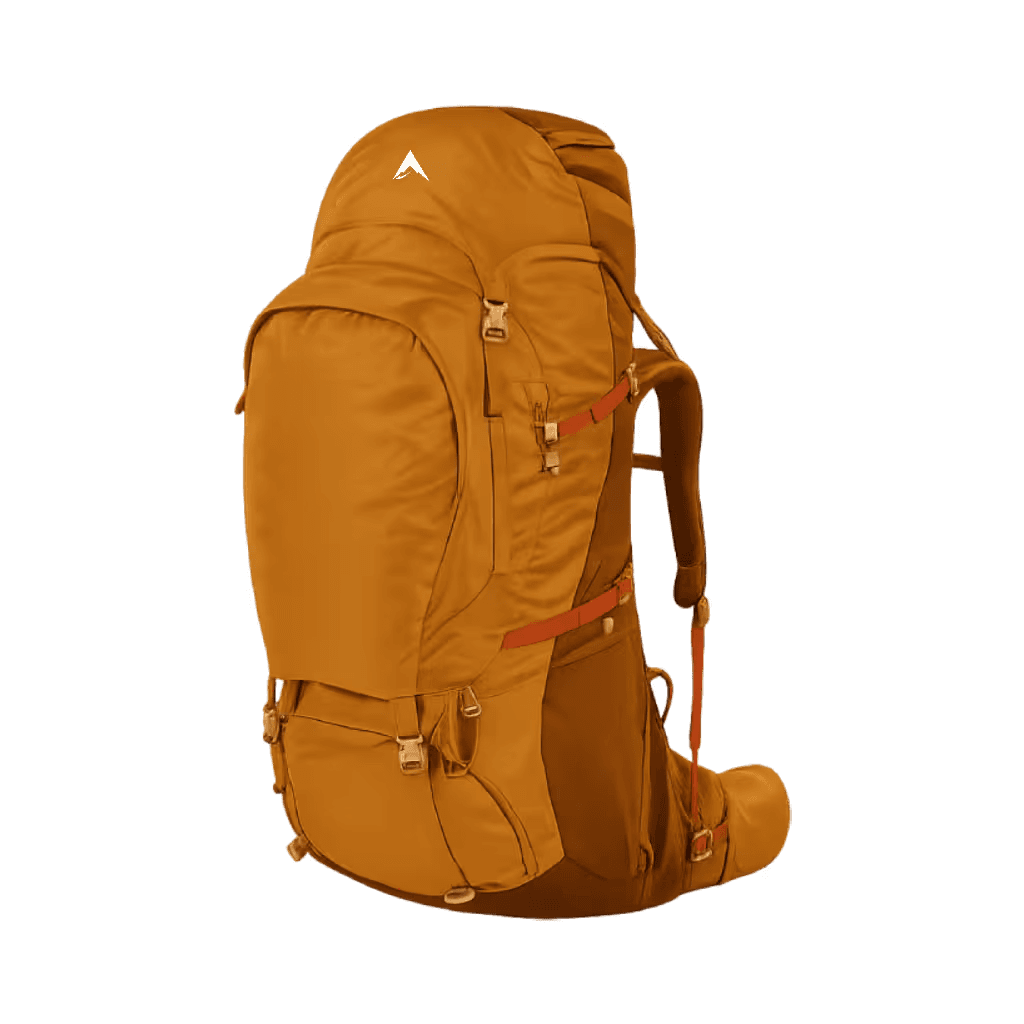
Titan Ridge Expedition Pack
Hip belt load management through 120 kilometers of total route distance, pulk trace line attachment for the glacier sections, and top lid emergency access for the summit push
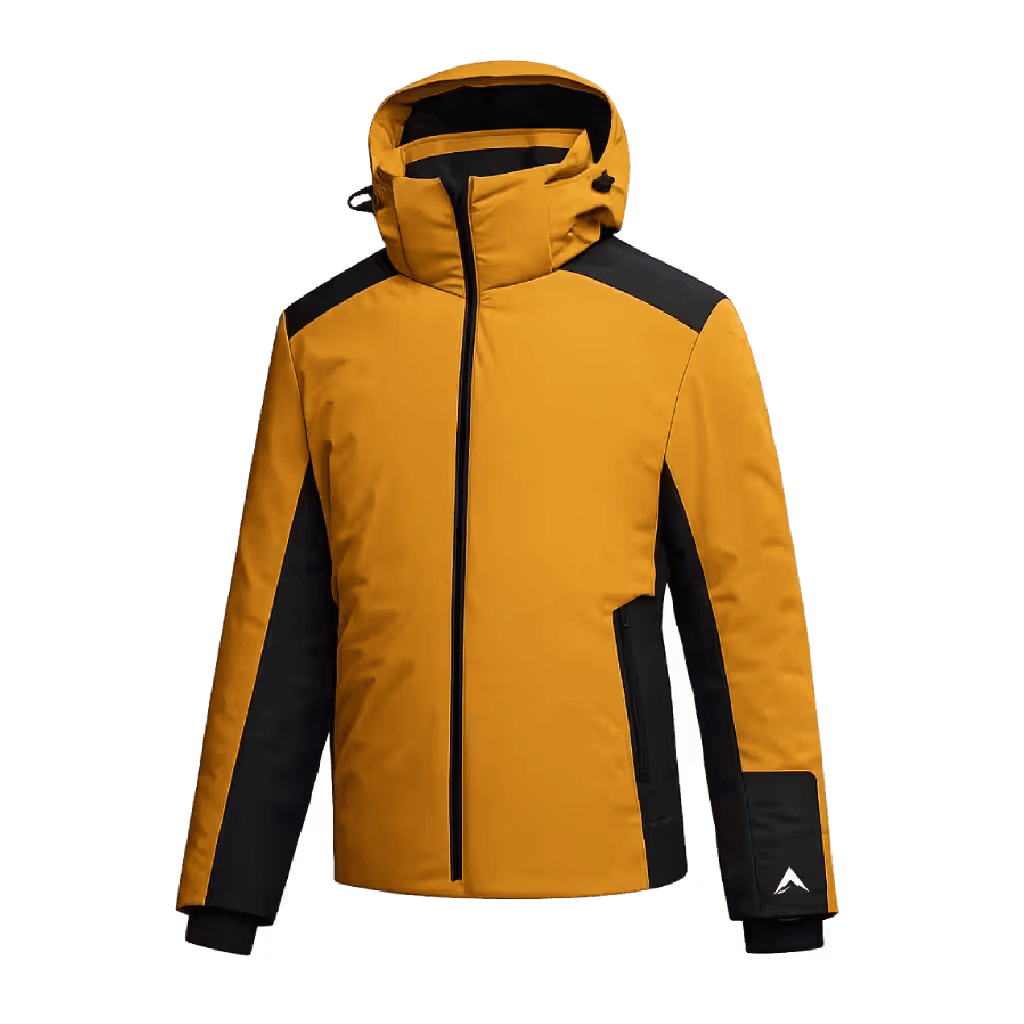
Tempest GTX Pro Shell
Storm defense at Windy Corner and the Football Field where 80 km/h gusts and -40°C ambient require a fully sealed outer barrier
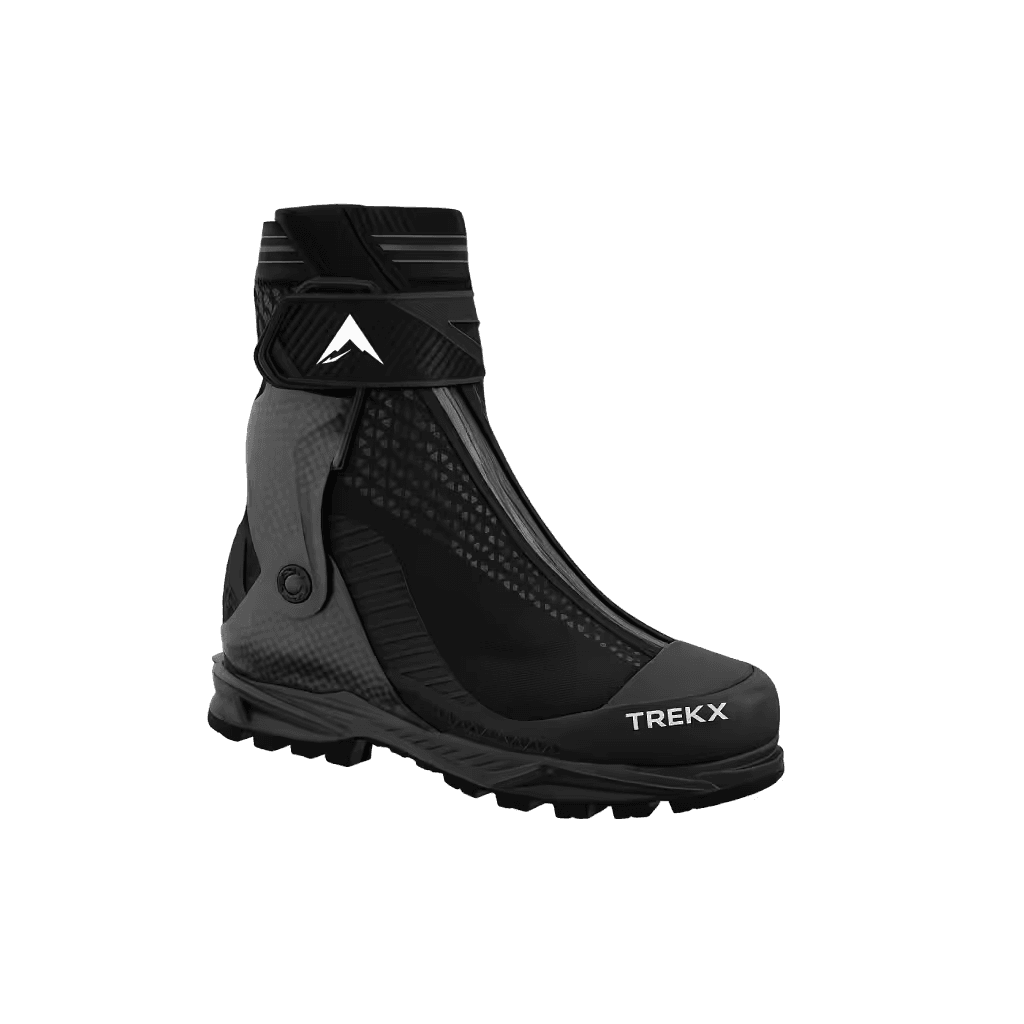
Glacier Apex Boots
Technical crampon platform for the fixed line sections above 4,350 meters and the Football Field approach
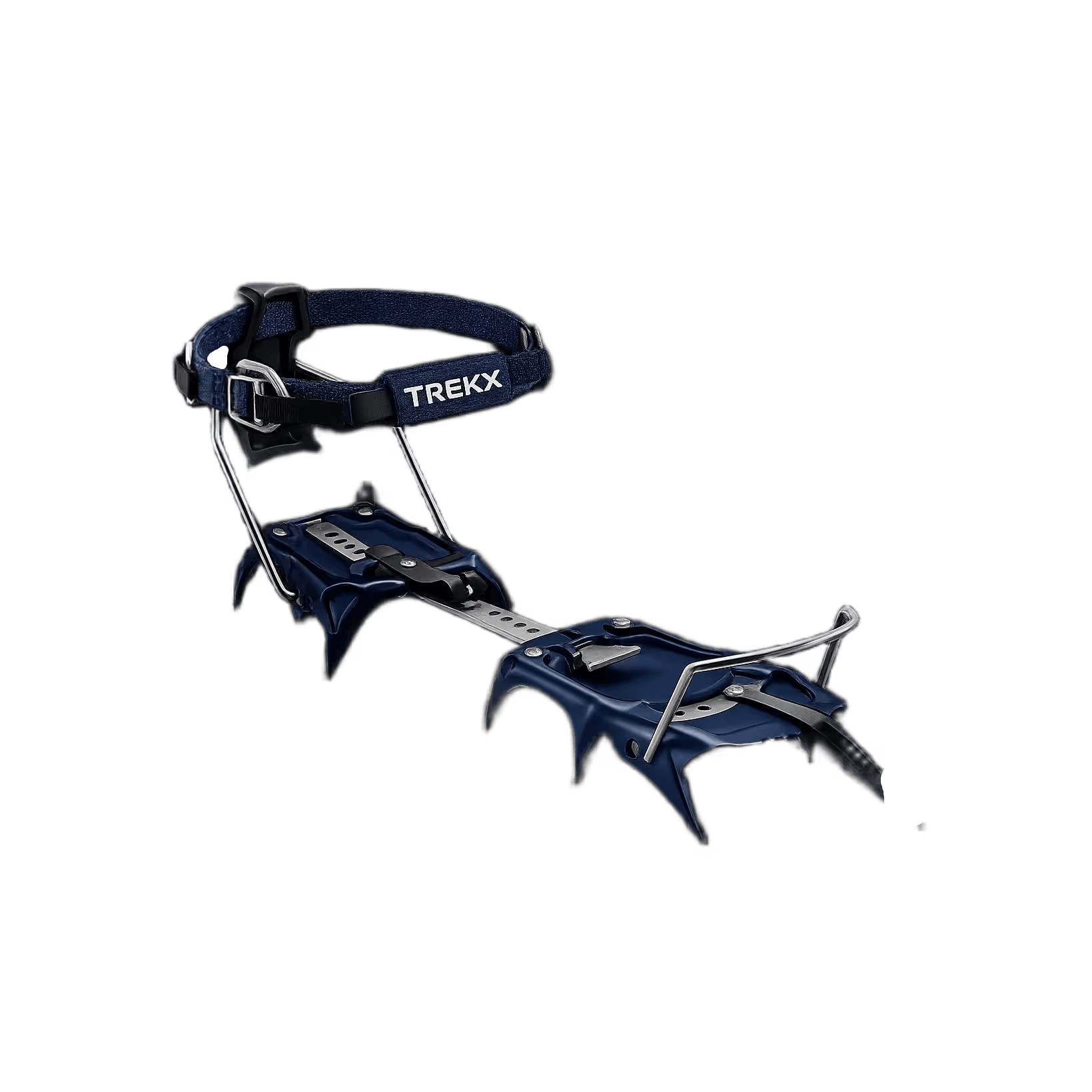
FangGrip Crampons
Binding tension checked at every camp as rubber component stiffening at -30°C progressively reduces clamping force from the correctly tensioned baseline at the Kahiltna landing
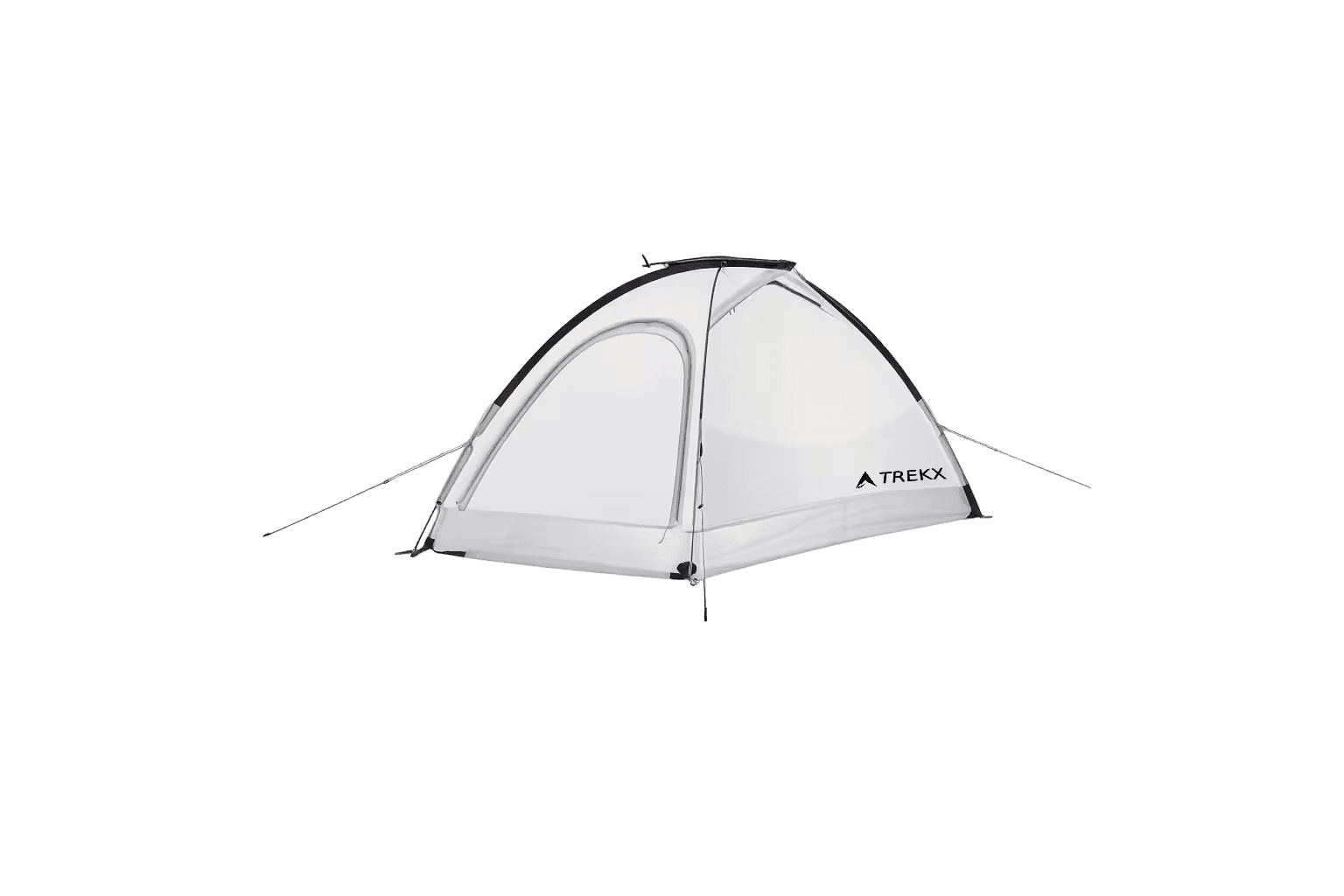
Aether UL Shelter
Ultralight construction requiring the snow wall protocol at every camp because the weight saving trades structural mass for preparation discipline
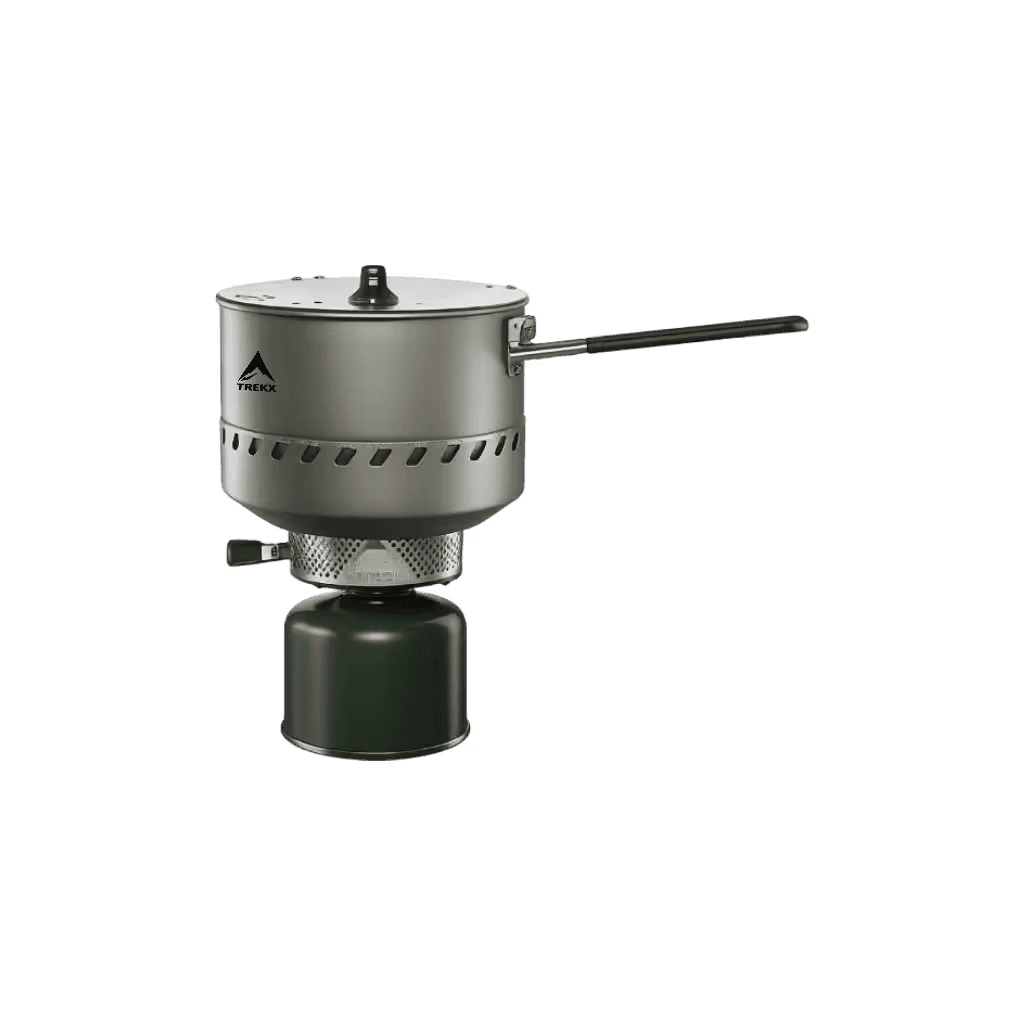
Inferno X Expedition Stove
Water production at -35°C ambient across 21 camp days where snow melting is the only water source
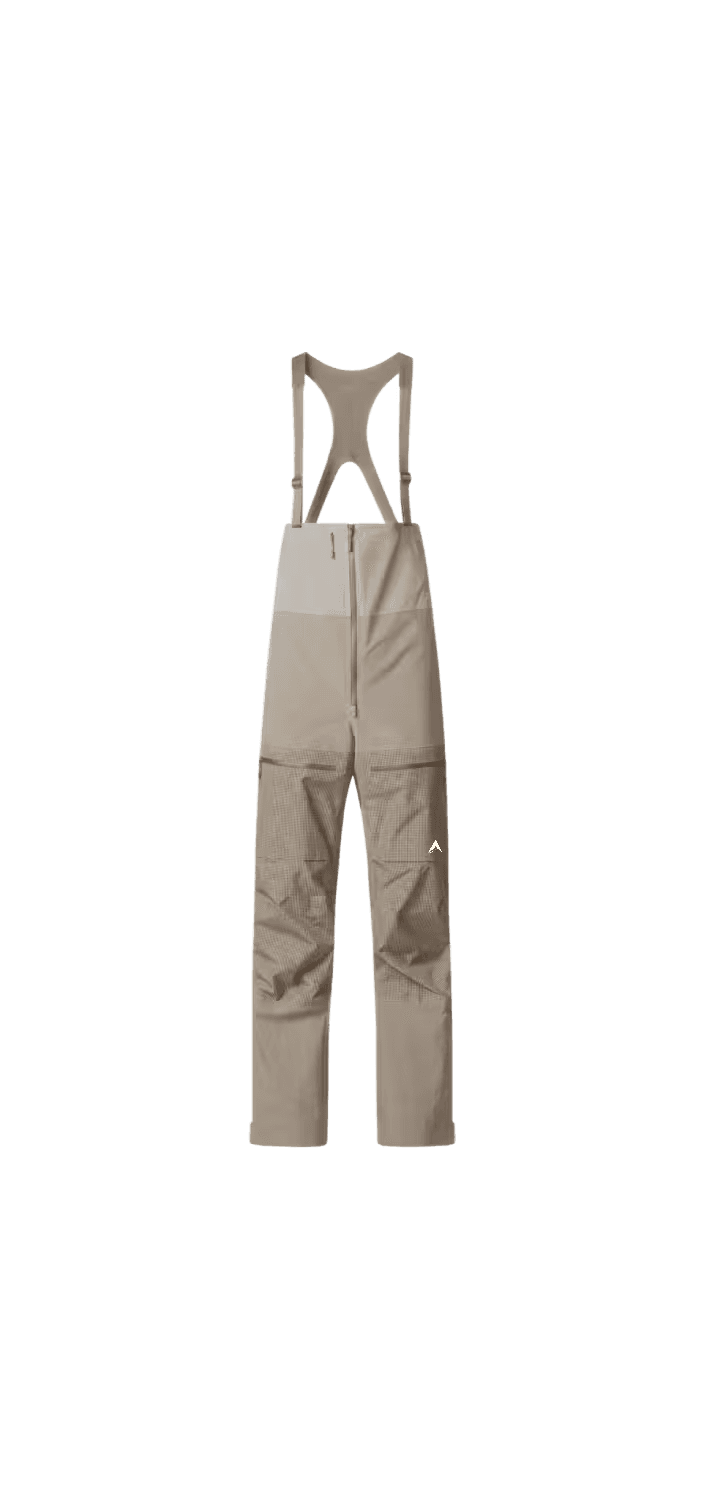
Tempest GTX Bib Pants
Wind and cold protection from the Kahiltna landing through the Football Field
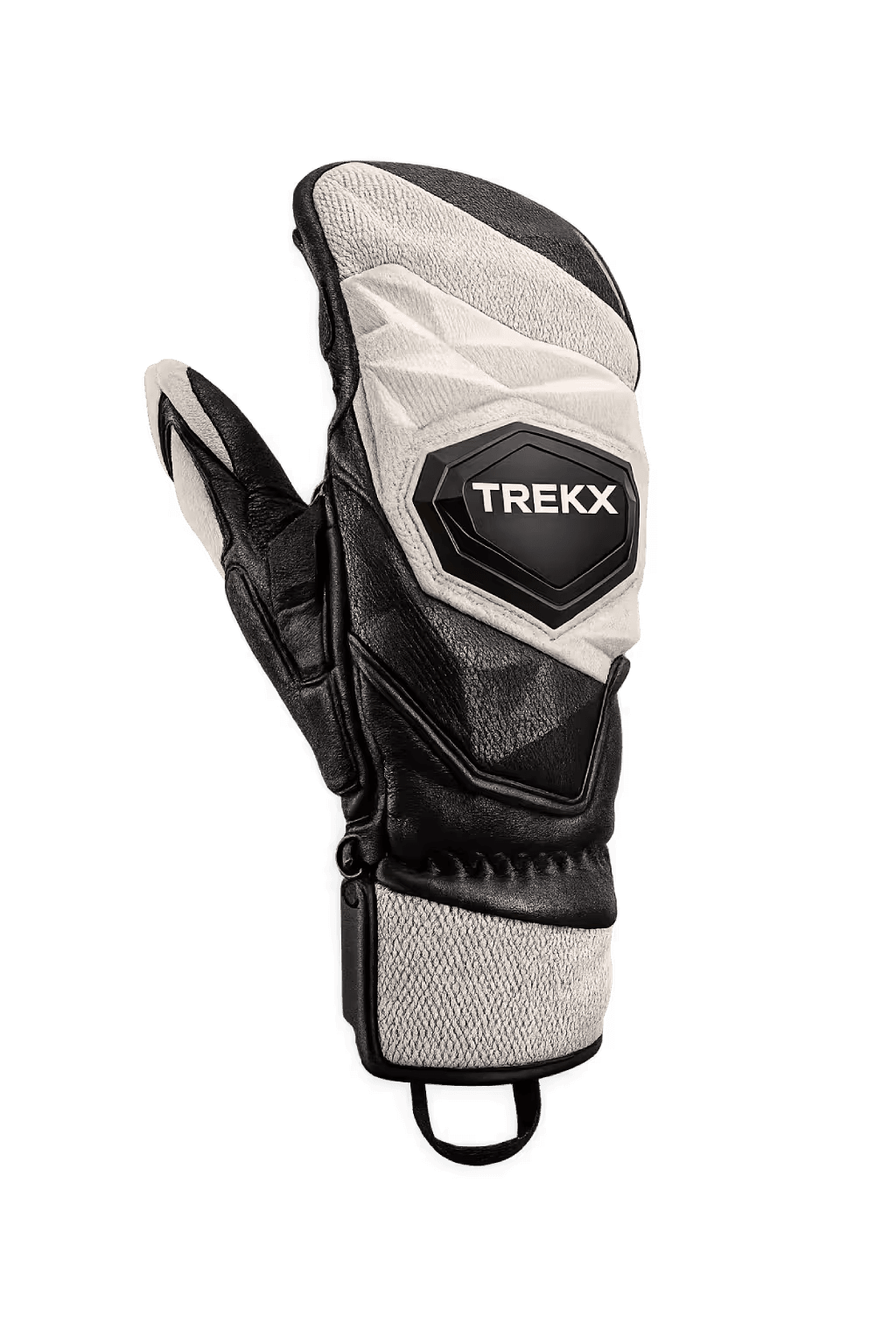
Icebound Expedition Gloves
Worn without removal above high camp where -40°C effective temperature produces frostbite in 60 seconds on bare skin
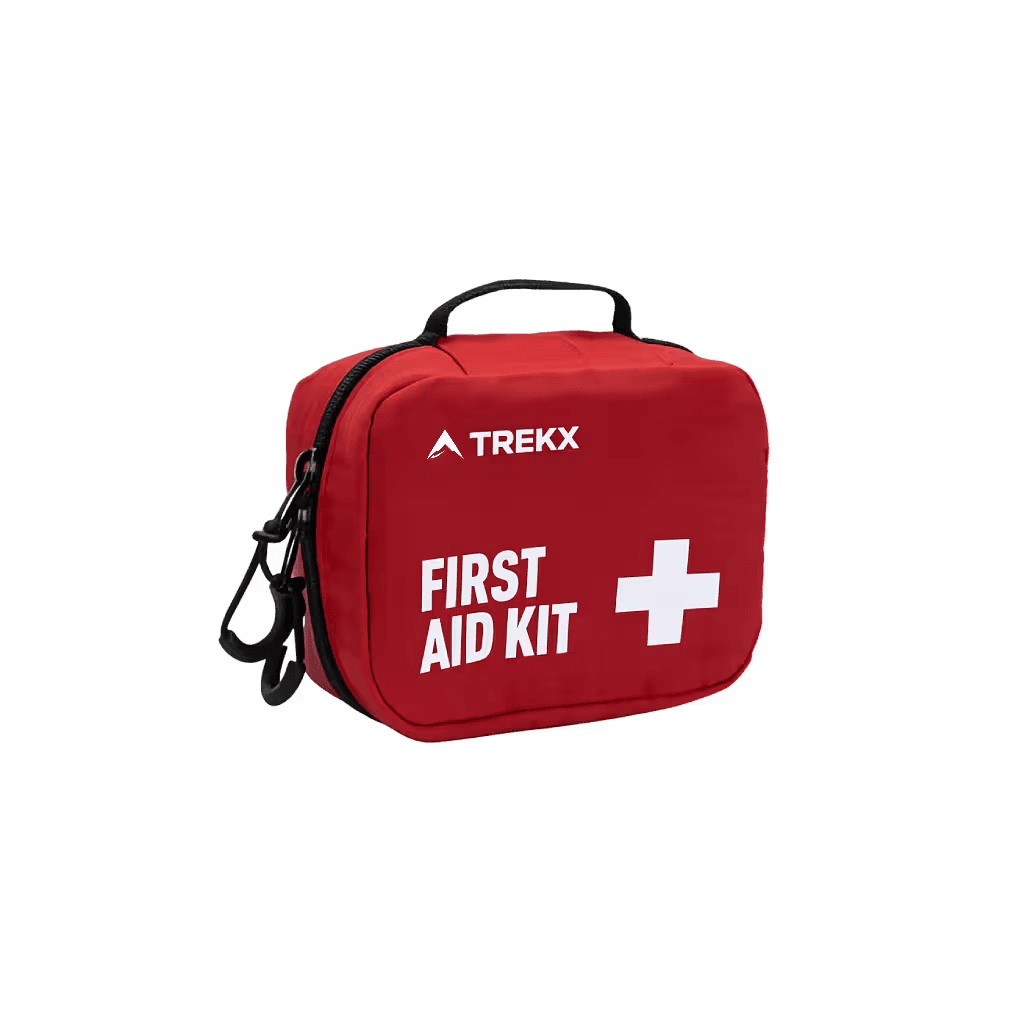
Summit Medic Pro Kit
The medical capability that bridges the gap between symptom onset at 5,240 meters and the physician-level care that the NPS ranger station provides below